
Gartner forecasts that over 40% of agentic AI projects will be canceled by the end of 2027, citing escalating costs, unclear business value, and inadequate risk controls (Gartner, 2025). This piece is for product leads and heads of design at enterprise AI companies who need a repeatable way to close that gap.
Table of Content
- What is the gap between a “technically capable” AI product and a “user-trusted” one?
- What is UniKwan's AI Experience Framework?
- Why do these five gaps decide whether an agentic AI project gets scrapped?
- How did UniKwan apply the AI Experience Framework to a real enterprise AI product?
- How can a product team find out where its AI product stands today?
- What should a product team do before shipping its next AI feature?
- Frequently Asked Questions (FAQs)
What is the gap between a "technically capable" AI product and a "user-trusted" one?
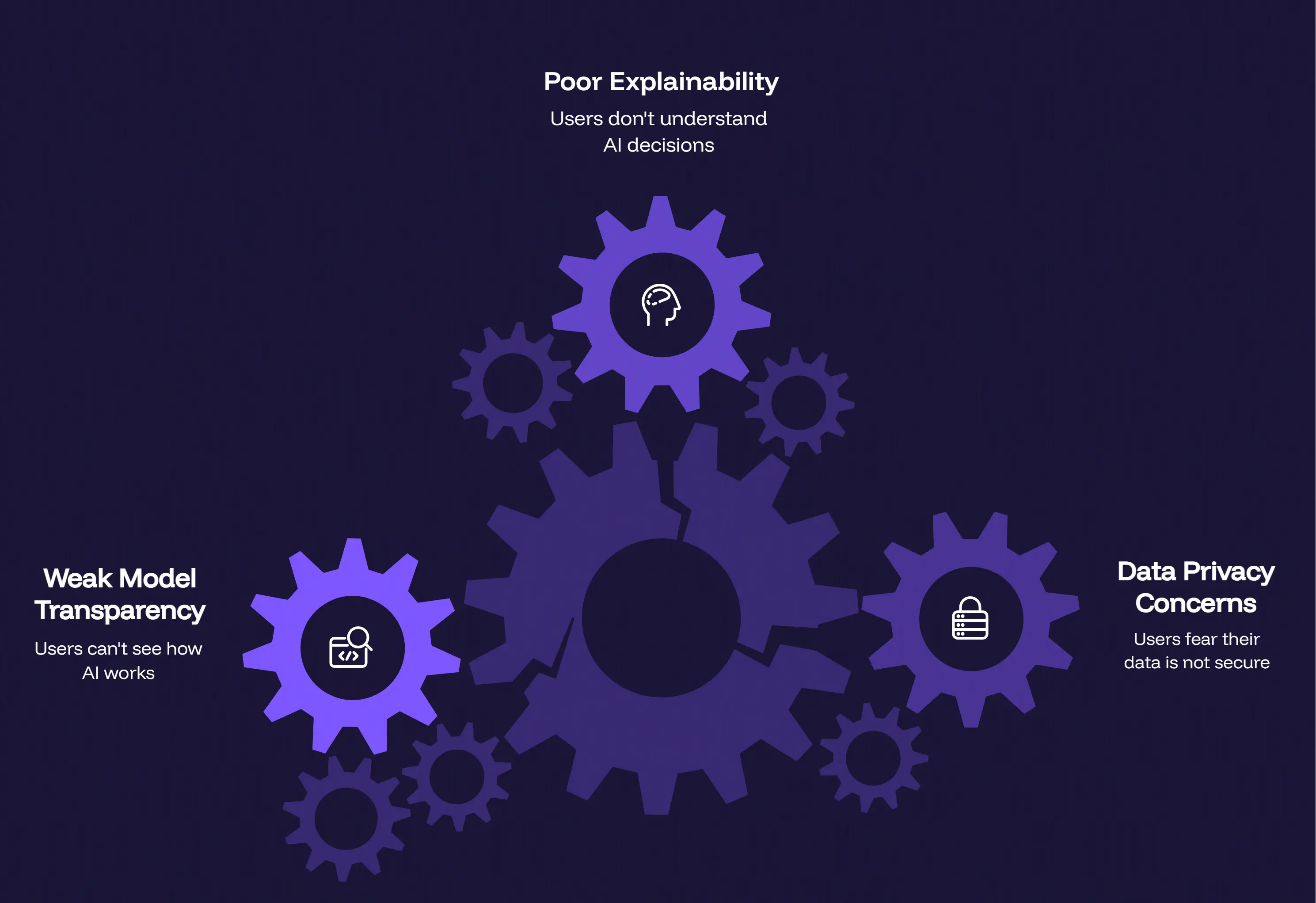
A 2026 Censuswide study commissioned by Gong surveyed 2,056 business leaders across the US and UK and found that 58% of companies had stalled an AI project, driven primarily by a deficit of trust rather than a shortage of budget (Gong, 2026). The leading blockers named were data privacy concerns at 34%, poor explainability at 30%, and weak model transparency at 28% (Gong, 2026). None of these are model-accuracy problems but experience problems: a user cannot see why the AI did what it did, so they stop relying on it. For a product team, that means audit readiness for trust and explainability now sits next to audit readiness for accuracy on the pre-launch checklist.
What is UniKwan's AI Experience Framework?
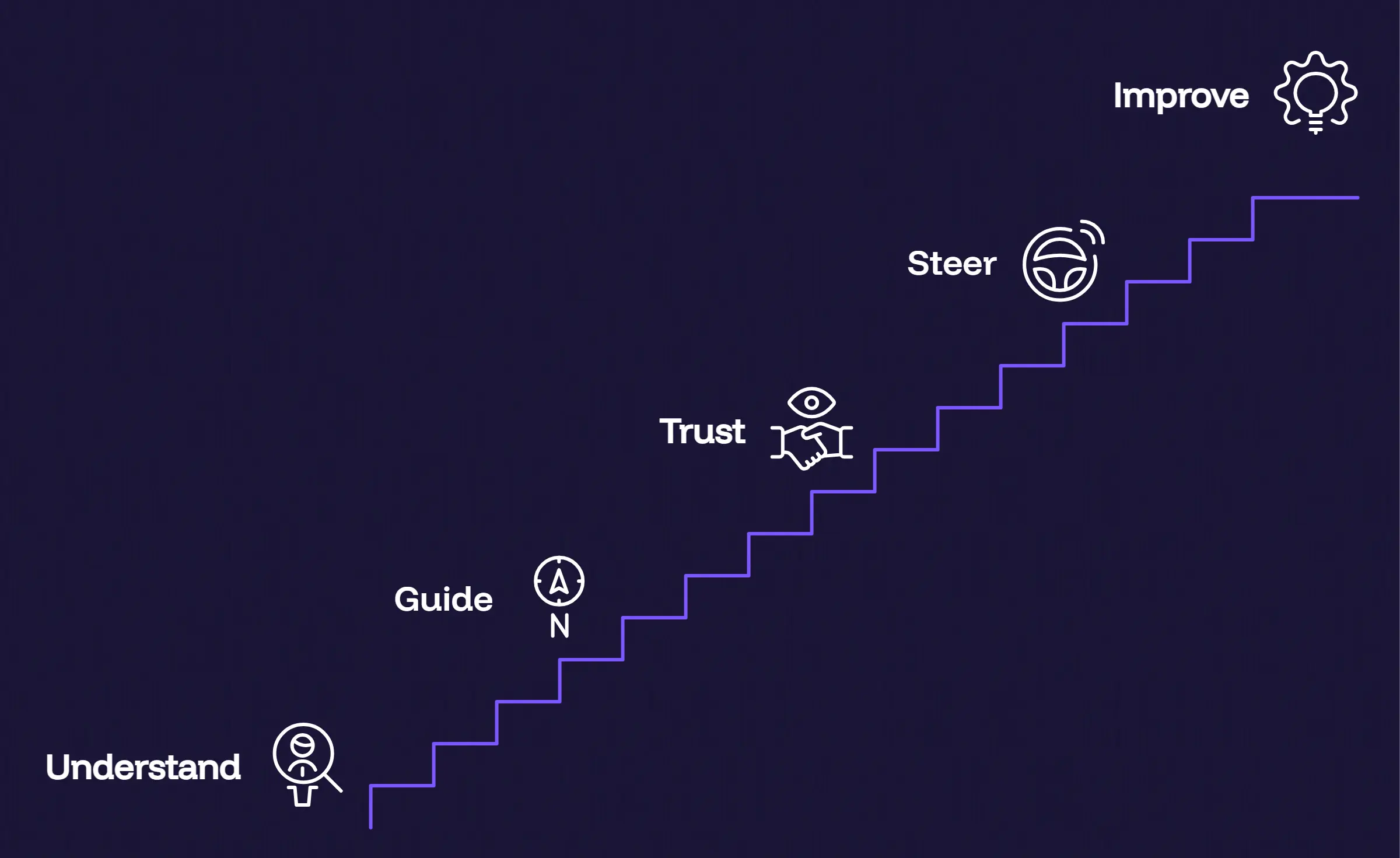
The AI Experience Framework is a five-stage design methodology UniKwan uses to map an AI product's distance between "technically capable" and "user trusted." Each stage names a specific point where enterprise AI products commonly lose users, based on UniKwan's engagement work in the AI UX practice:
- Understand:Generic outputs are a workflow killer. The AI has to be grounded in the user's real context, not just what the underlying model knows in general.
- Guide:There's a difference between AI that presents data and AI that helps a user know what to do with it. Guidance has to be clear enough to act on immediately.
- Trust:One bad answer erases ten good ones. The product has to behave predictably and handle failure states in ways that preserve user confidence rather than collapsing it.
- Steer: AI that feels imposed rather than empowering disengages users fast. Meaningful control has to be built into the experience itself, not just made technically available somewhere in the settings.
- Improve:Users stay with AI products that visibly learn. The feedback loop has to be closed and legible to the person relying on it, not invisible in the background.
Why do these five gaps decide whether an agentic AI project gets scrapped?
Each of the five stages is a separate point of failure, and when several break down at once, users disengage and revert to manual work rather than filing a bug report. That compounding pattern is consistent with what McKinsey's 2026 AI Trust Maturity Survey found: in the agentic era, organizations have to guard against AI systems doing the wrong thing, not only saying the wrong thing, because autonomous action raises the cost of every unresolved trust gap (McKinsey, 2026).
Read against Gartner's 40%-plus cancellation forecast, the pattern is less a benchmark than a description of what happens at scale when Understand, Guide, Trust, Steer, and Improve are treated as afterthoughts instead of design requirements.
How did UniKwan apply the AI Experience Framework to a real enterprise AI product?
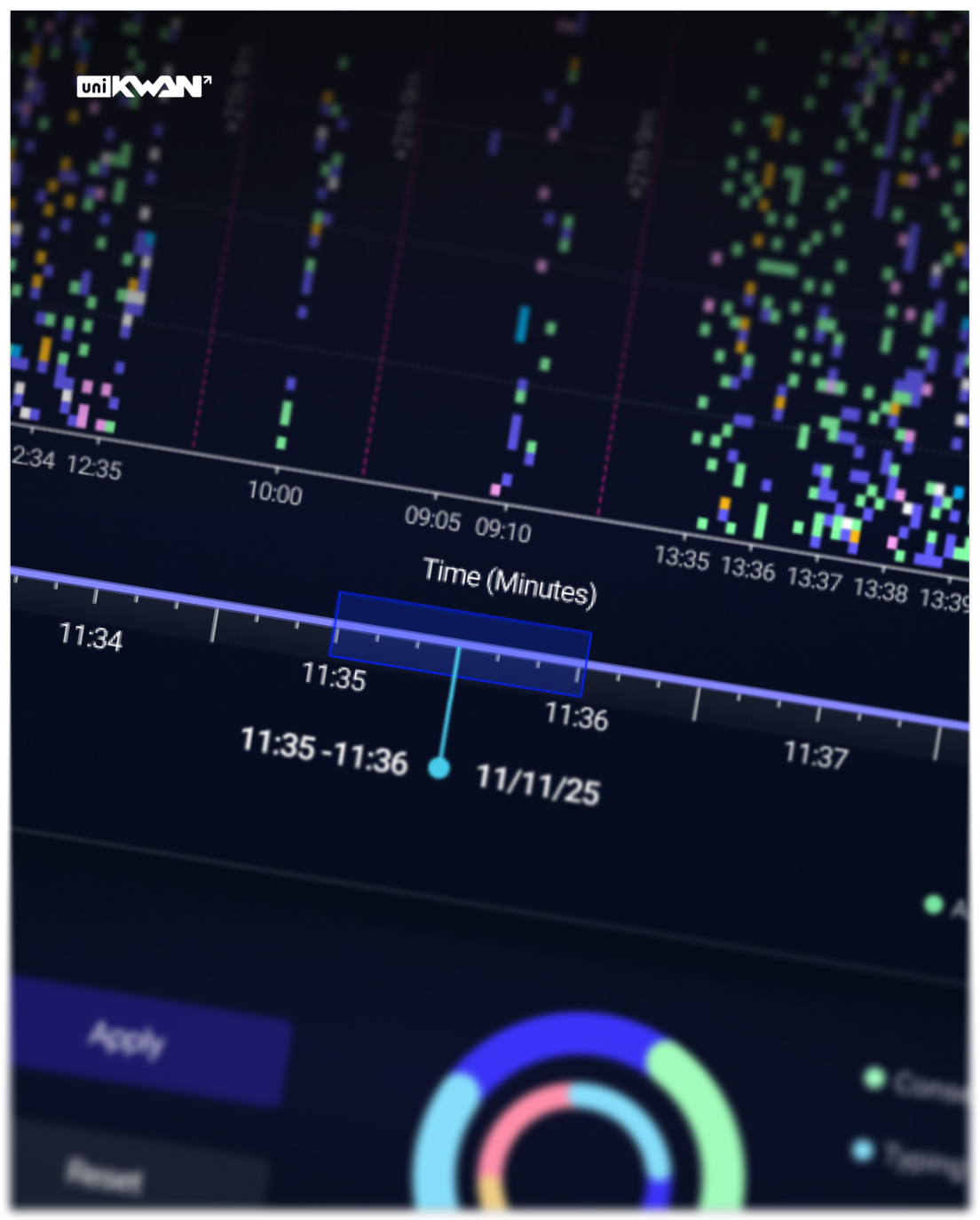
UniKwan applied the AI Experience Framework directly to Brelyon's Visual Engine, an enterprise AI platform built to analyze cross-dimensional, time-based behavioral data — thousands of user interactions, system events, and automation patterns layered across a single operations screen — without compromising the analytical depth the product was built for. The challenge was the distance between what the AI could compute and what analysts and decision-makers could actually read, validate, and act on without hesitation. UniKwan mapped all five stages onto the engagement:
- Understand:Mapped analyst workflows and decision-making patterns to ground the AI in real user intent rather than the model's raw capability surface.
- Guide:Designed layered navigation and progressive disclosure, a UX pattern that reveals technical depth only when a user reaches for it, to simplify dense intelligence without stripping out precision.
- Trust:Built transparent qualitative systems and visible AI analytics so AI-generated insights could be validated by an analyst, not just consumed on faith.
- Steer:Crafted active workbenches and configurable layers so analysts could exercise real oversight, not just observe the system from outside it.
- Improve:Built a modular, scalable dashboard system using AI-driven exploratory-data-analysis blueprints and streaming analytical workflows designed to grow as the system learned.
How can a product team find out where its AI product stands today?
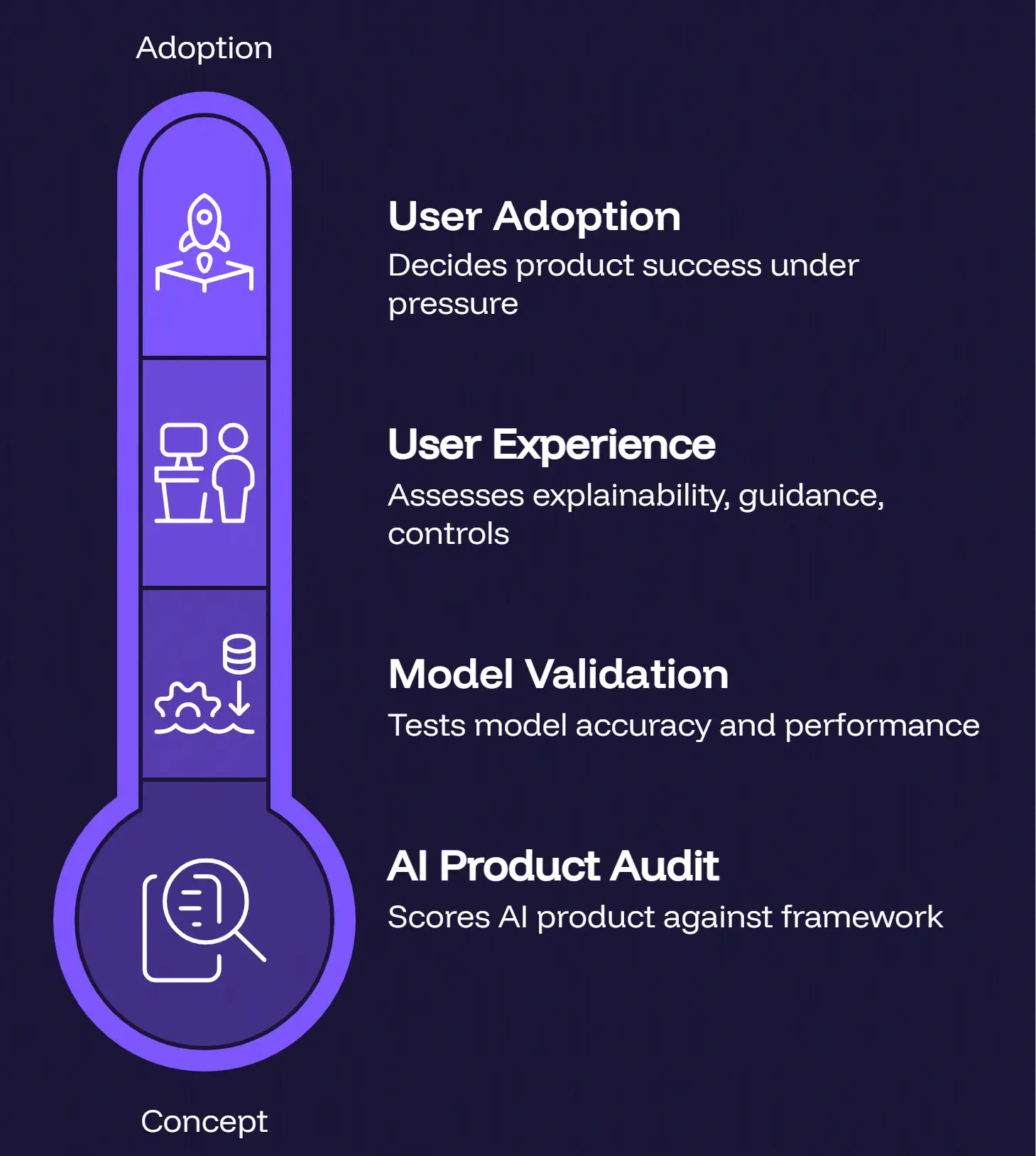
A product team can score its AI product against the AI Experience Framework in about three minutes using UniKwan's AI Product Audit, a free self-assessment tool built to make the "is this ready" question answerable before it costs the team users.
The tool returns a composite score plus a stage-by-stage breakdown showing exactly where trust gaps exist and how significant each one is.
Most teams spend months validating whether their model is right and never test whether the surrounding experience — the explainability, the guidance, the controls, the recovery paths — is ready for a real user under real pressure. That second test is usually the one that decides adoption, and it is the one the audit is built to surface.
What should a product team do before shipping its next AI feature?
Run the product against the framework before the launch date is locked. Start with the AI Product Audit to see where the product currently sits, or book a consultation to work through the framework with UniKwan's AI UX practice directly.
Frequently Asked Questions (FAQs)
Q1. What is the AI Experience Framework?
The AI Experience Framework is UniKwan's five-stage design methodology for mapping the gap between an AI product that is technically capable and one users actually trust enough to rely on.
Q2. What are the five stages of the AI Experience Framework?
Understand (grounding AI in real user context), Guide (making outputs actionable, not just informative), Trust (predictable behavior and graceful failure states), Steer (meaningful, built-in user control), and Improve (a visible, closed feedback loop).
Q3. Why do enterprise AI projects get scrapped even when the underlying model works?
Most cancellations trace back to trust and experience gaps rather than model accuracy. A 2026 Gong-commissioned study found 58% of companies had stalled AI projects over concerns about data privacy, explainability, and model transparency, not budget or capability.
Q4. What is the UniKwan AI Product Audit?
It's a free, three-minute self-assessment that scores an AI product against each stage of the AI Experience Framework, returning a composite score and a breakdown of where trust gaps exist and how significant they are.
Q5. Is the AI Product Audit the same as UniKwan's paid AI UX engagement?
No. The Audit is a self-serve diagnostic that anyone can run in a few minutes. UniKwan's Design Sprint and Partnership engagement models are the paid next step for teams that want to act on what the Audit surfaces.
Share



Growth Marketing & Operations


