Most B2B buyers make up their mind about a company before anyone from that company gets on a call. Forrester puts 70 to 80 percent of the B2B buying journey behind a screen, completed before a buyer ever contacts a vendor directly. For a company that's genuinely good at the work but thin on public proof, that's the entire problem: the market is deciding without them in the room. This piece is for founders and marketing leads at companies that keep hearing "we didn't know you did that" from clients who hired them anyway. It walks through UniKwan's branding and positioning process phase by phase, with a real, anonymized client engagement running through it.
Table of Content
- What's the gap between doing great work and being known for it?
- How does UniKwan run brand discovery with a client?
- What does the discovery process actually surface?
- How do you identify who your best customers actually are?
- What actually separates real positioning from generic brand language?
- What do you do when your strongest proof can't be named?
- Do you need a brand-new logo, or just a better one?
- What's the takeaway for a company stuck in this gap?
- Frequently Asked Questions (FAQs)
What's the gap between doing great work and being known for it?
The gap is visibility, not capability, and it's more common than most founders assume. UniKwan recently worked with a specialist AI firm that made the point clearly: over 100 clients, a founder with a real, sizable following, and technical work good enough that once someone hired the firm, they didn't leave. Its single biggest business problem wasn't the work.
It was that almost nobody outside its existing client base could tell what it actually did or how good it was at doing it. That's the space UniKwan's branding and positioning process is built to close: the distance between what a company can actually do and what the market believes it can do.
How does UniKwan run brand discovery with a client?
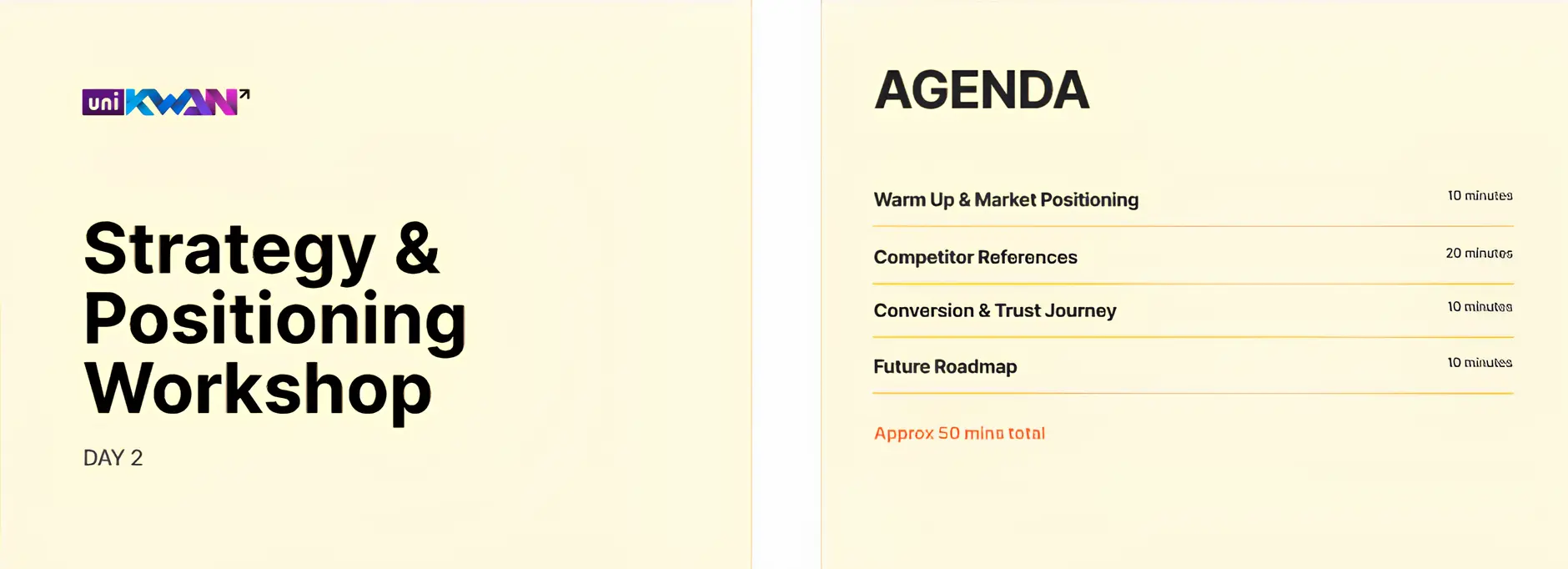
UniKwan runs discovery as a structured, two-day virtual workshop with a client's decision-makers in the room, working live on a shared FigJam board. Guided by pre-work from a questionnaire, the session moves through focused exercises on client stories, brand perception, business goals, audience priorities, values, personality, and communication gaps. Day one covers the business itself: its story, strategic priorities, audience landscape, current perception, service offerings, and communication challenges. Day two turns outward, examining competitive landscape, market positioning, buyer decision-making, trust drivers, and future growth opportunities. The goal is not to force conclusions early, but to gather the richest possible inputs first and synthesize them into a clear positioning direction afterward.
FigJam is the tool that makes this collaborative rather than conversational. Clients contribute live using sticky notes, text, and stamps across guided sections, which structures the session, captures ideas in real time, makes abstract brand topics easier to discuss visually, and keeps everyone aligned through features like Spotlight and guided navigation. It turns the workshop into a live thinking space where ideas get surfaced, organized, and discussed together, rather than a one-way briefing.
What does the discovery process actually surface?
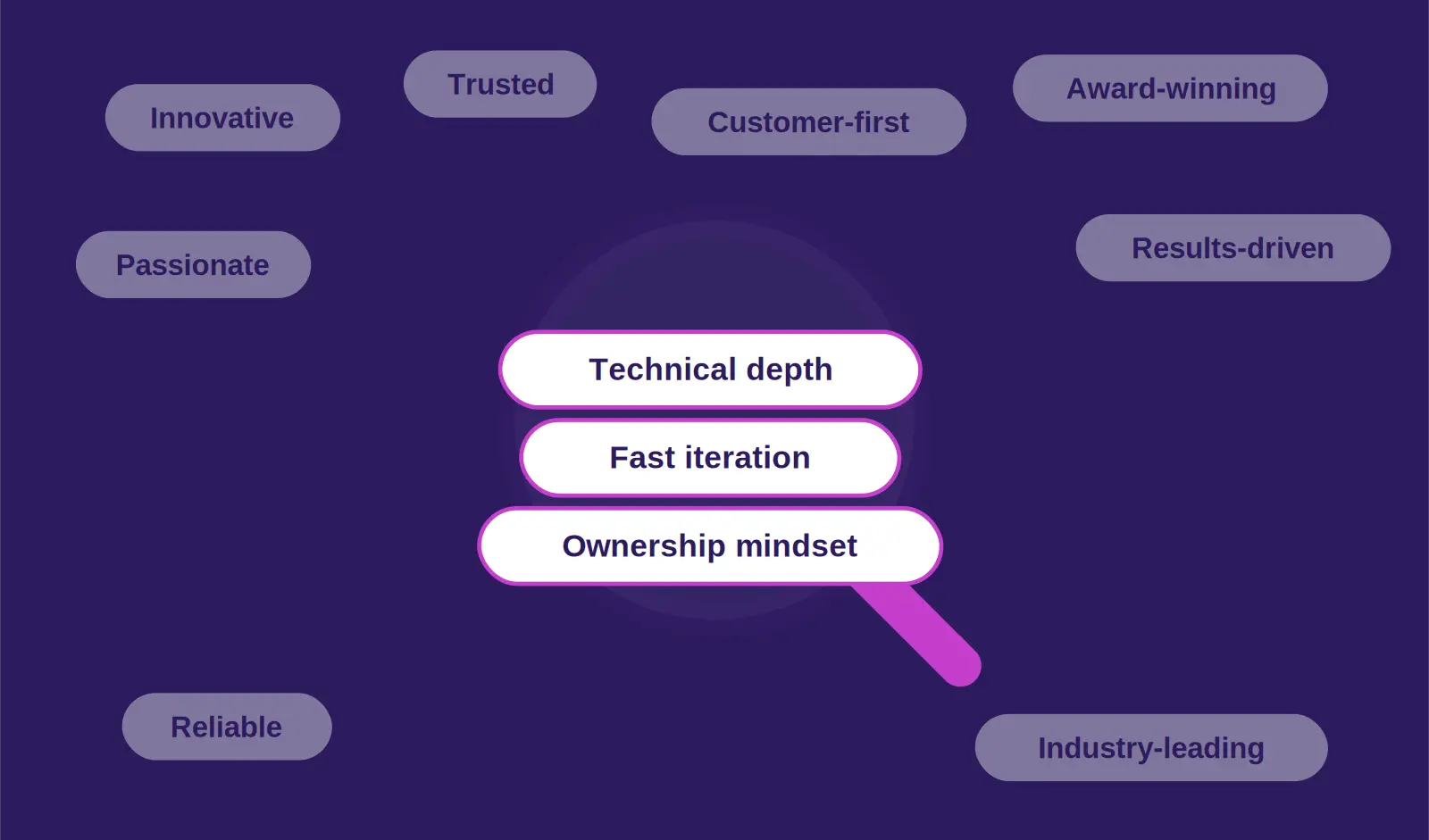
The most useful single input from this client's workshop was one real story, reconstructed in detail: a company that came to the firm after an outside vendor and an internal team had both already failed at the same problem for over a year. Our client threw out the existing solution, rebuilt it from scratch, and that one project turned into years of repeat work. That story surfaced more than a board full of brand adjectives could have: technical depth across a wide range of industries, a fast and iterative pace of delivery, and an ownership mindset that went beyond the original scope of work. A single detailed story, pressure-tested with follow-up questions, does more positioning work than a list of values ever will.
How do you identify who your best customers actually are?
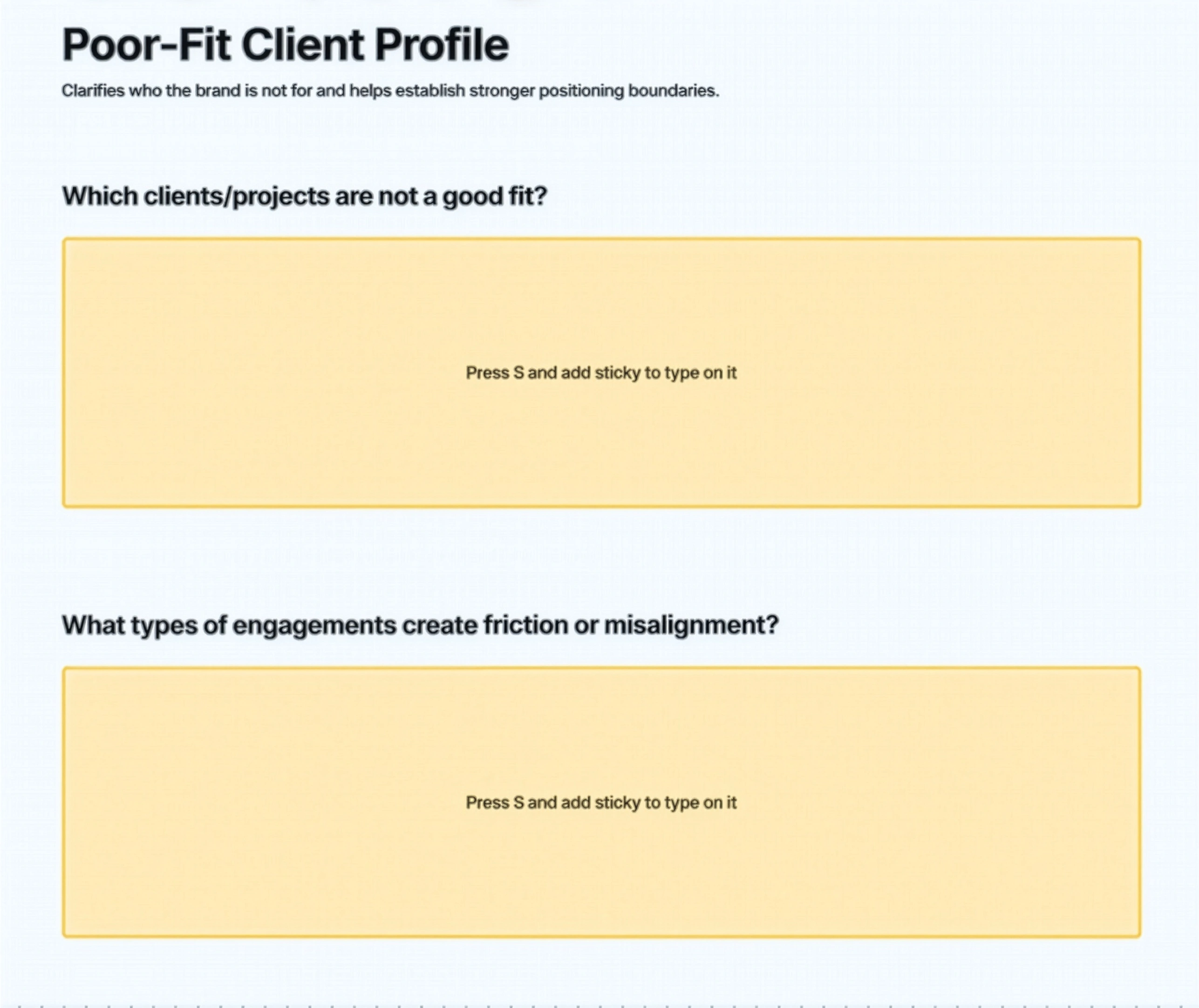
You stop guessing from personas and start checking against revenue and retention. The obvious answer for this client was "enterprise logos." The real answer, once the team looked at who actually paid and stayed, was more specific. Three groups showed up clearly: profitable, founder-led mid-market companies that cared about outcomes over optics and stayed for years; larger enterprises whose internal teams were stretched too thin to build the work themselves; and ecosystem partners who wanted hands-on technical implementation work. Each of these buyers hires for a different reason, so each needs different proof and a different message. Segmentation only earns its keep once it's tested against who is actually paying and staying, not who looks best in a slide.
What actually separates real positioning from generic brand language?
Real positioning names the two alternatives a buyer is choosing between and stands clearly outside both of them. "We're innovative, technical, and client-focused" describes every firm in a category, which means it describes none of them. For this client, the process named both extremes it didn't want to be mistaken for: strategic consultancies with strong thinking but thin hands-on delivery, and large generalist firms or low-cost vendors with execution capacity but no specialist depth. The opportunity sat between the two.
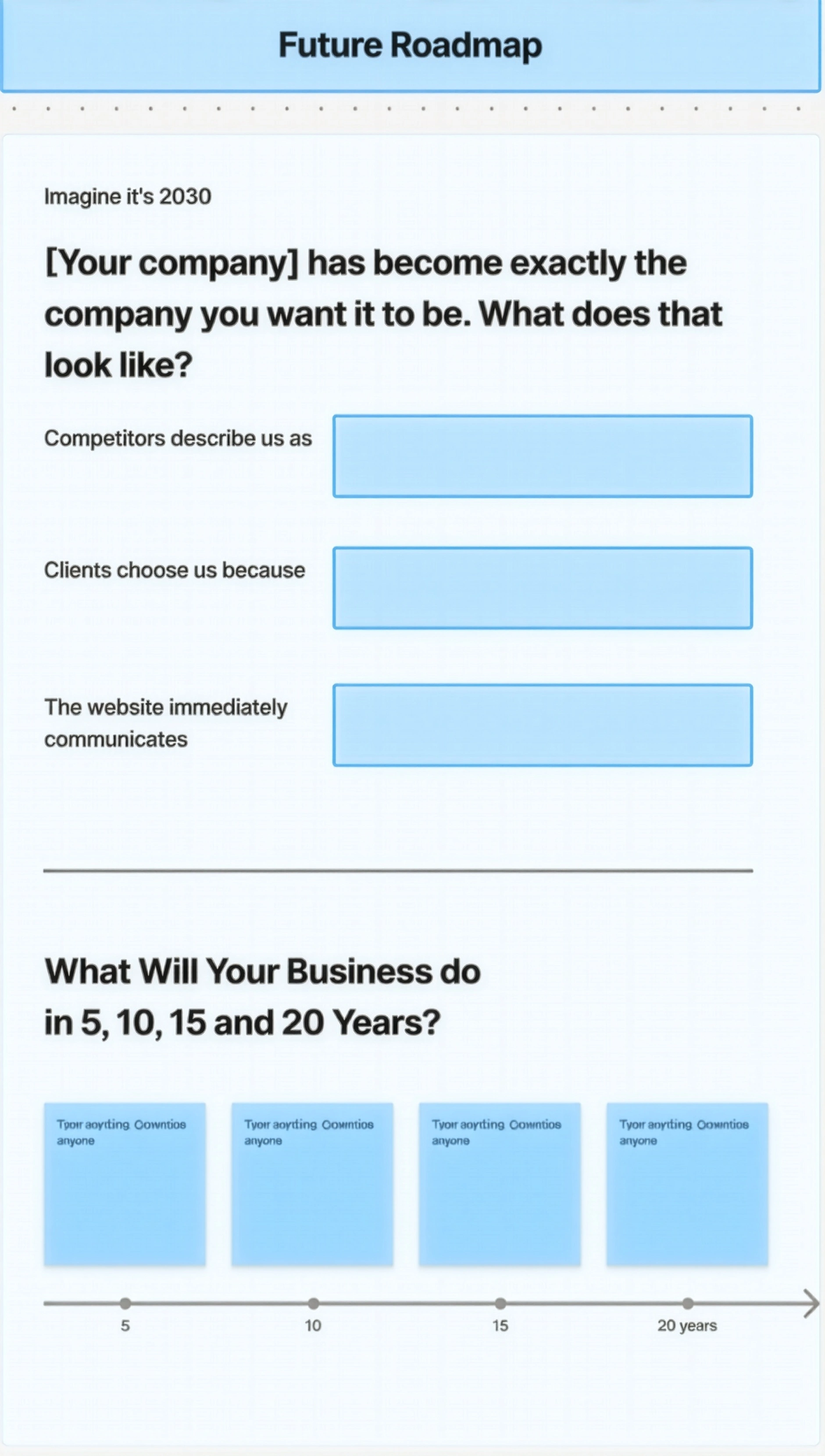
This is also where the client's own language gets stress-tested, not just its tone. The word "consulting" became a genuine sticking point in the sessions. The client does guide people through technical decisions before execution starts, which technically fits the word. Where it drew a hard line was on being seen as a firm whose final output is a deck of recommendations. Its own words: "doers, not talkers." That distinction changed how the offer got framed, toward the idea that the deliverable is always a working system, never a report. Personality got the same treatment and landed on something specific: niche over mass-market, authoritative over soft, confident and direct over consultative. The shorthand that stuck in the room was simple: get-it-done energy, not softened or overly accommodating.
What do you do when your strongest proof can't be named?
This client had served 100-plus clients, several of them recognizable names, and almost none would authorize a public logo or case study. That's a real constraint, and it shapes the whole approach. UniKwan describes the problem, the technical approach, and the measurable outcome in detail, swaps out anything identifying, and lets the substance carry the credibility instead of a logo. Wherever a real number exists, it leads, because a number holds up on its own even without a name attached to it. Over-stripping the story to protect anonymity is its own mistake; the aim is to keep it specific, just not identifiable.
Do you need a brand-new logo, or just a better one?
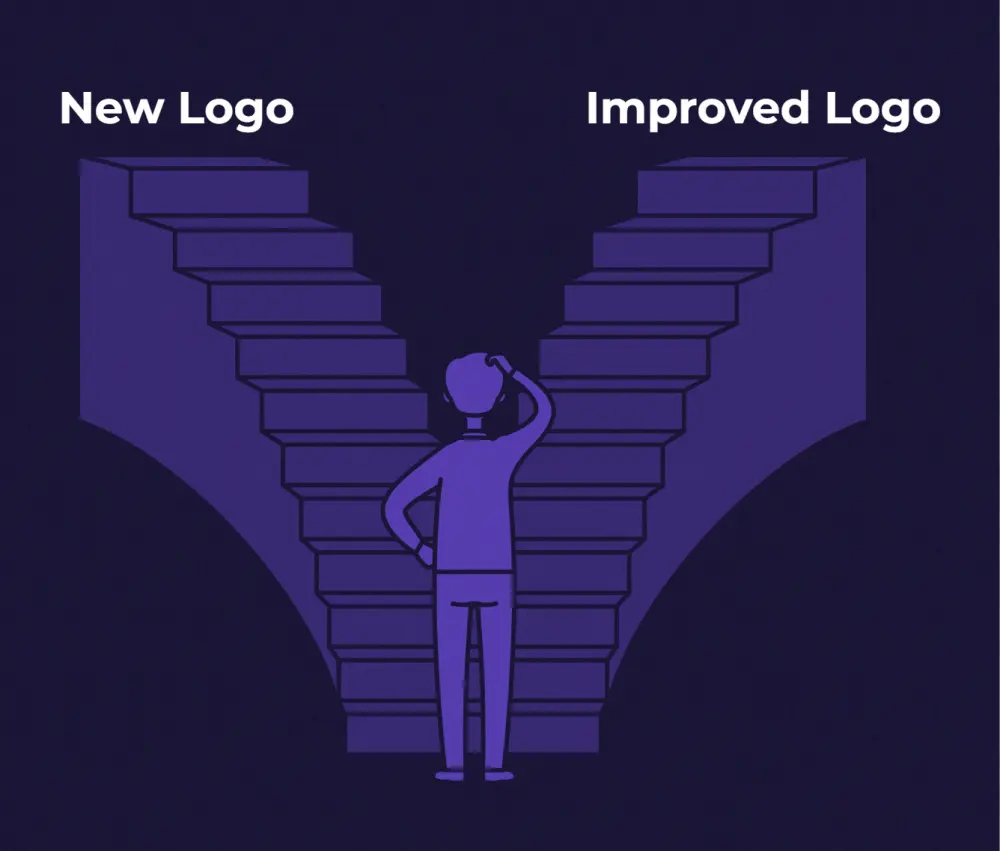
Usually, a better one. By the time visual identity work starts, the hard positioning thinking is already done, and the biggest mistake other teams make is treating a rebrand as a chance to start from nothing. A recognizable mark, even an imperfect one, carries equity that a brand-new logo has to earn back from zero. For this client, UniKwan built two moodboard directions and recommended the one the client found more alive and current over the one that simply looked more "premium" in a deck. On the logo itself, the team mapped what already carried recognition, then explored refinements: adjusted colors, a small addition signaling the client's AI focus, and two spacing variants tested side by side. It's the same evolution model Google or Slack use, quietly refining a mark over years rather than replacing it outright. The same logic carried into the website: a homepage mockup was built before any final copy was written, then tested against one question — does a stranger understand what this company does within five seconds?
What's the takeaway for a company stuck in this gap?

For most companies in this position, the real gap is legibility: real strength that hasn't been made visible to the people deciding whether to hire them. That's exactly what this process is built to close, from a two-day workshop through to a homepage an ICP can actually understand in five seconds. If a company is excellent at the work and still hard to find or hard to explain, the fix usually isn't more work. It's making the existing work legible to the people who'd pay for it.
Book a discovery call with UniKwan to work through this process for your own brand.
UniKwan also runs a free, three-minute AI Product Assessment for teams specifically working on AI products, scoring across Trust, Control, Integration, and Adoption.
Frequently Asked Questions (FAQs)
Q1. What is UniKwan's branding and positioning process?
It's a structured brand strategy engagement that starts with a two-day discovery workshop covering a client's story, perception, audience, values, and positioning, then moves through segmentation, message and personality development, and visual identity refinement, ending with a tested homepage direction.
Q2. How long does the discovery workshop take?
The core discovery workshop runs as a two-day virtual session with the client's decision-makers, preceded by a pre-work questionnaire and followed by synthesis into a positioning direction.
Q3. Does UniKwan always recommend a brand-new logo during a rebrand?
No. UniKwan typically recommends refining an existing mark rather than replacing it, since a recognizable logo carries equity a brand-new one has to earn back from zero. A full redesign is reserved for cases where the existing mark carries no usable recognition.
Q4. How does UniKwan handle case studies when a client can't be named?
UniKwan describes the problem, technical approach, and measurable outcome in detail, removes anything identifying, and leads with real numbers, so the substance of the result carries the credibility instead of a client logo.
Q5. How is positioning different from a brand messaging or tone exercise?
Positioning identifies the two alternatives a buyer is actually choosing between and defines where a company stands outside both. Messaging and tone come after that decision; without it, messaging tends to describe an entire category rather than one company inside it.
Share



Growth Marketing & Operations