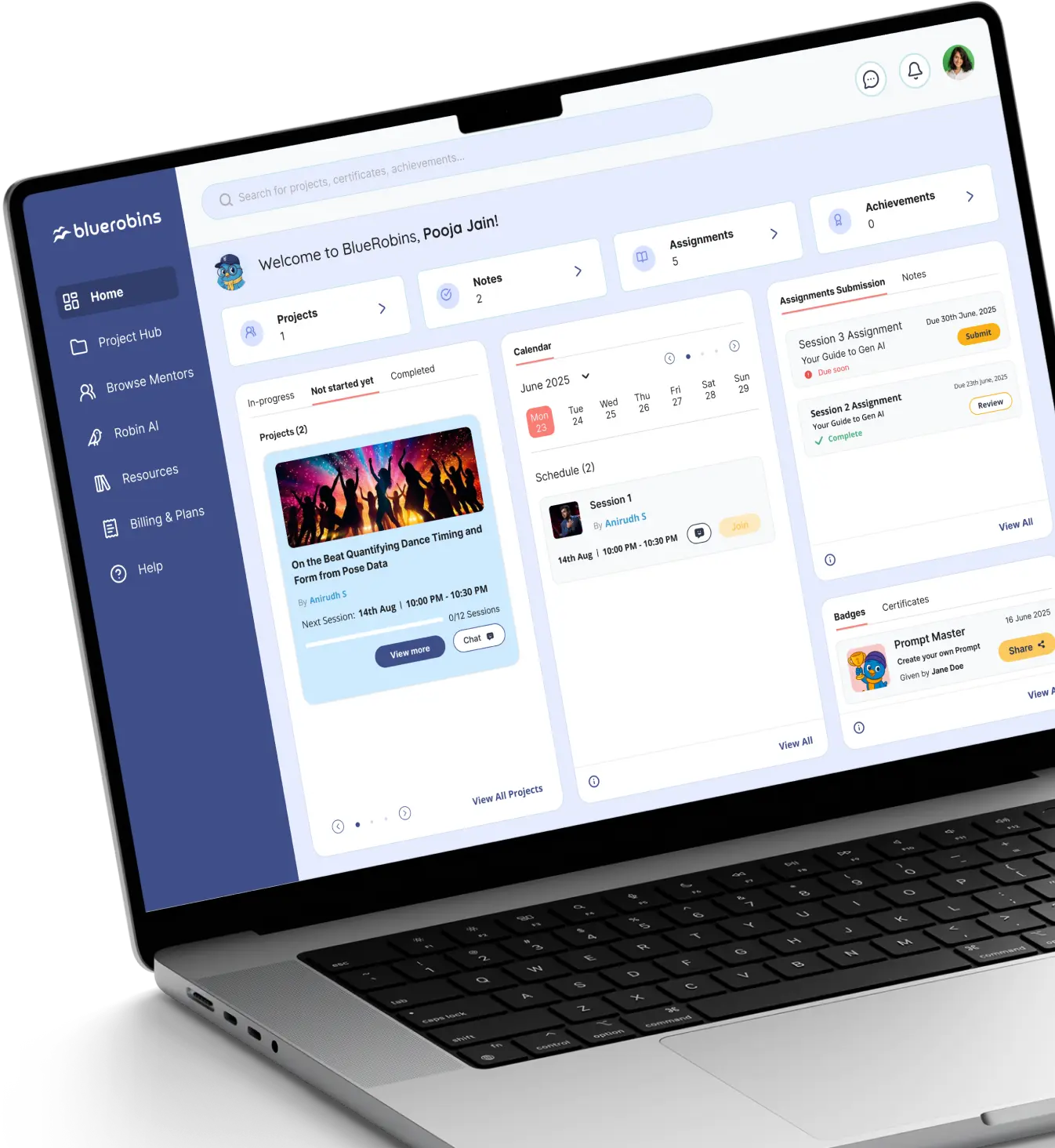
Student Portal
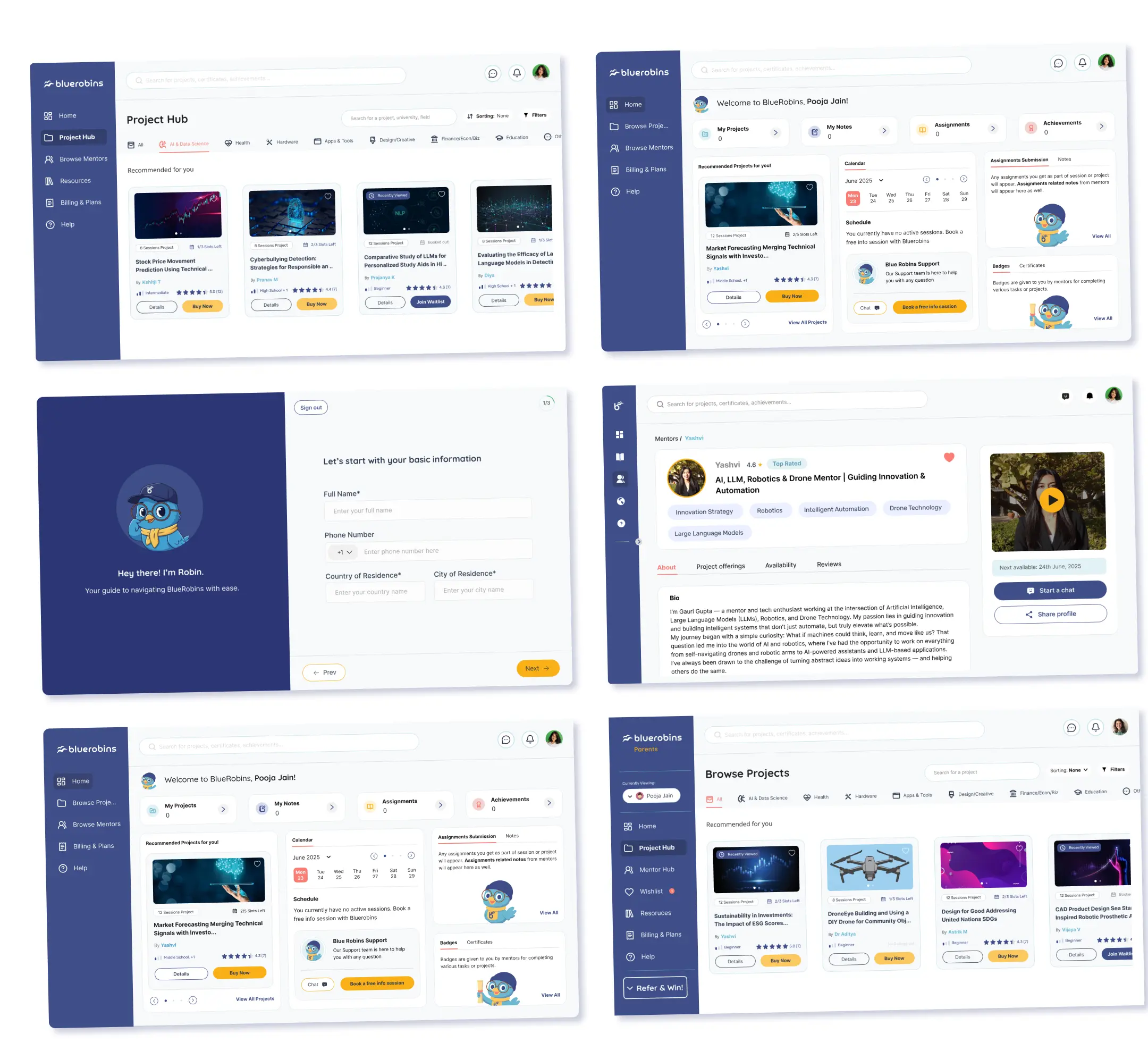
Our research drew on published studies from Nielsen Norman Group and Pew Research into how teenagers engage with digital products — short attention spans, high sensitivity to tone, and a strong need for identity expression. The student portal was built on emotion-first principles.
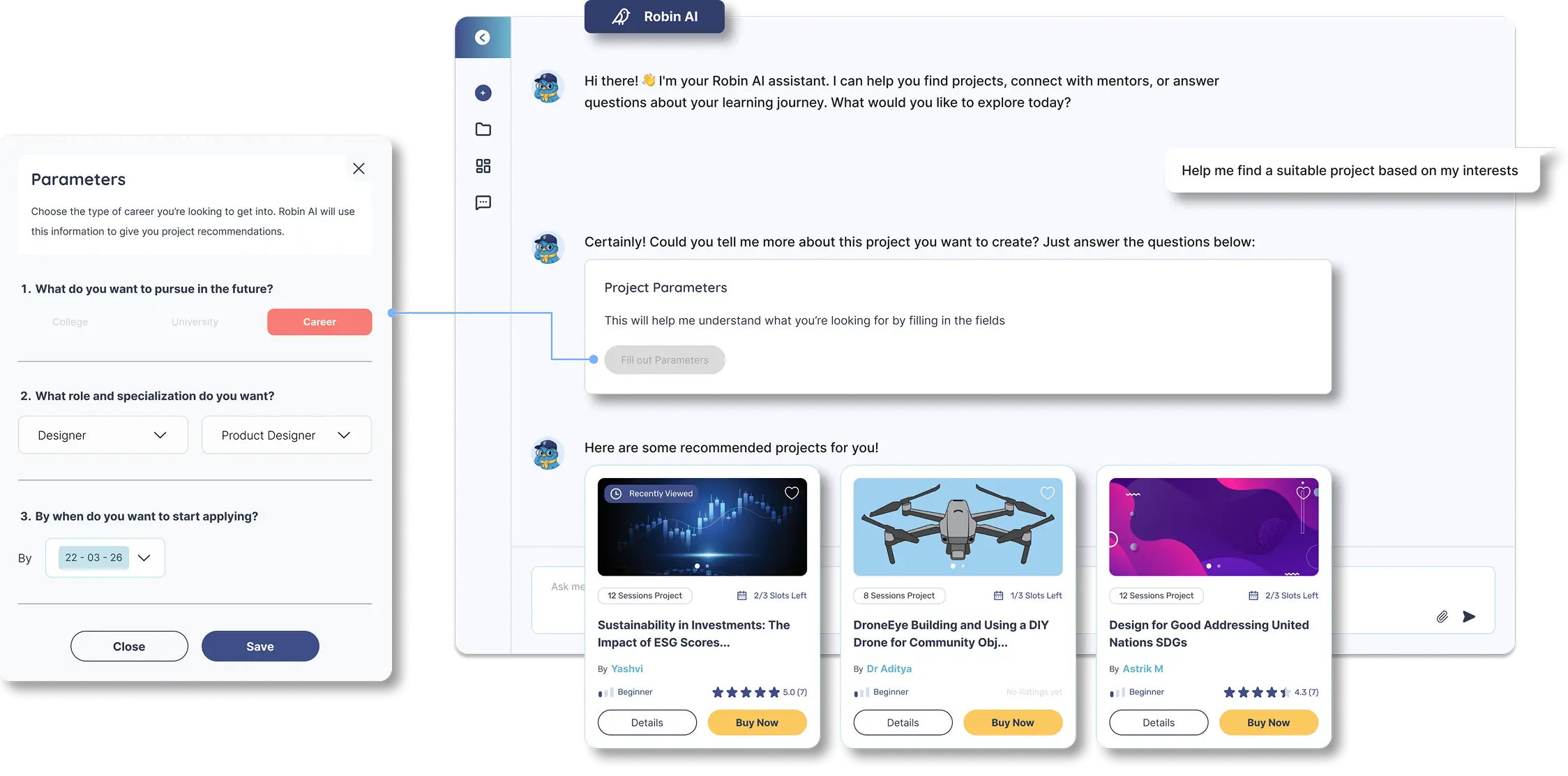
AI Companion
Most students arrive at BlueRobins curious, although not sure what exactly they want to build. Robin opens a conversation; students share their interests, career goals, and academic background. Robin surfaces projects that match.
Complete Projects
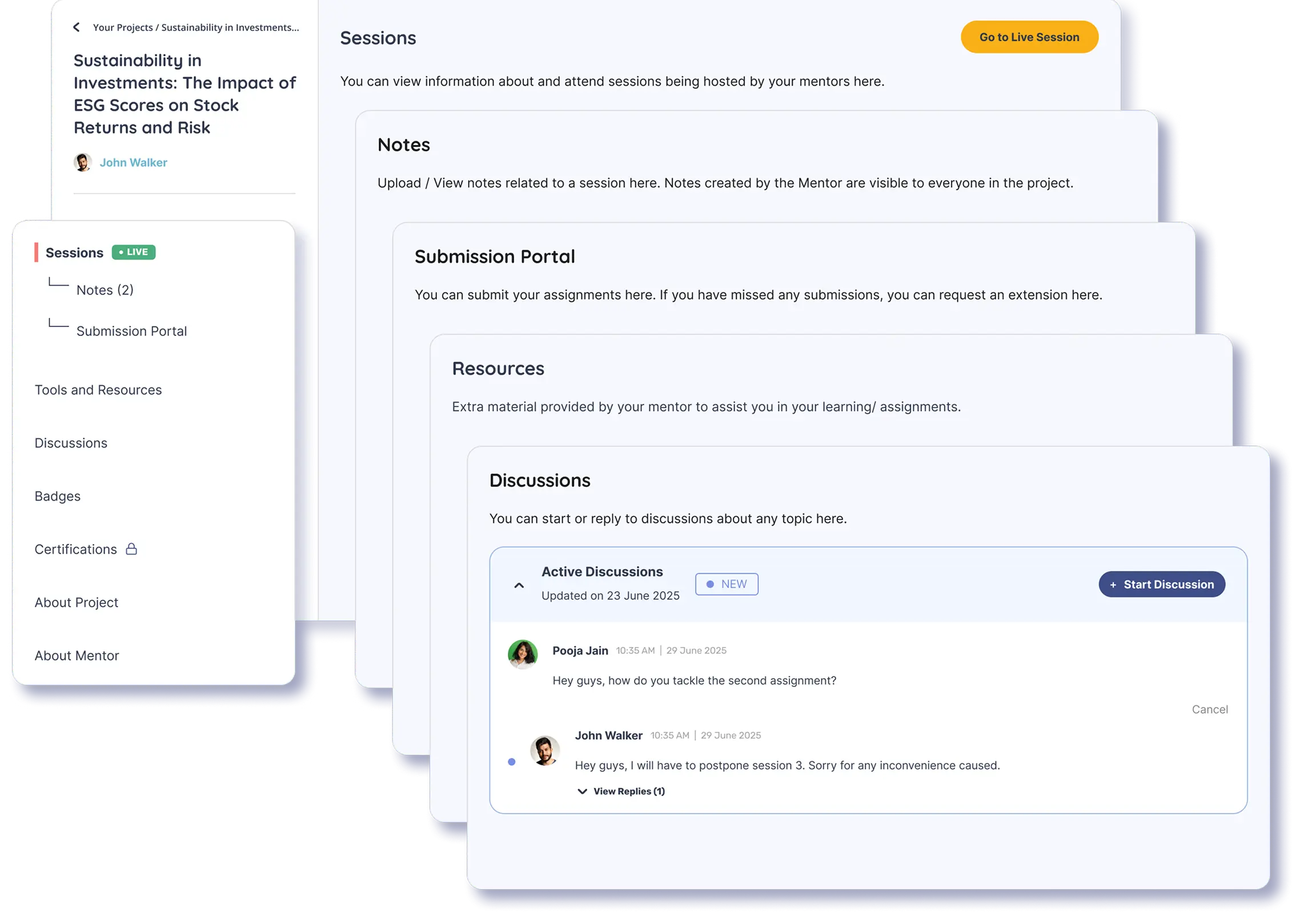
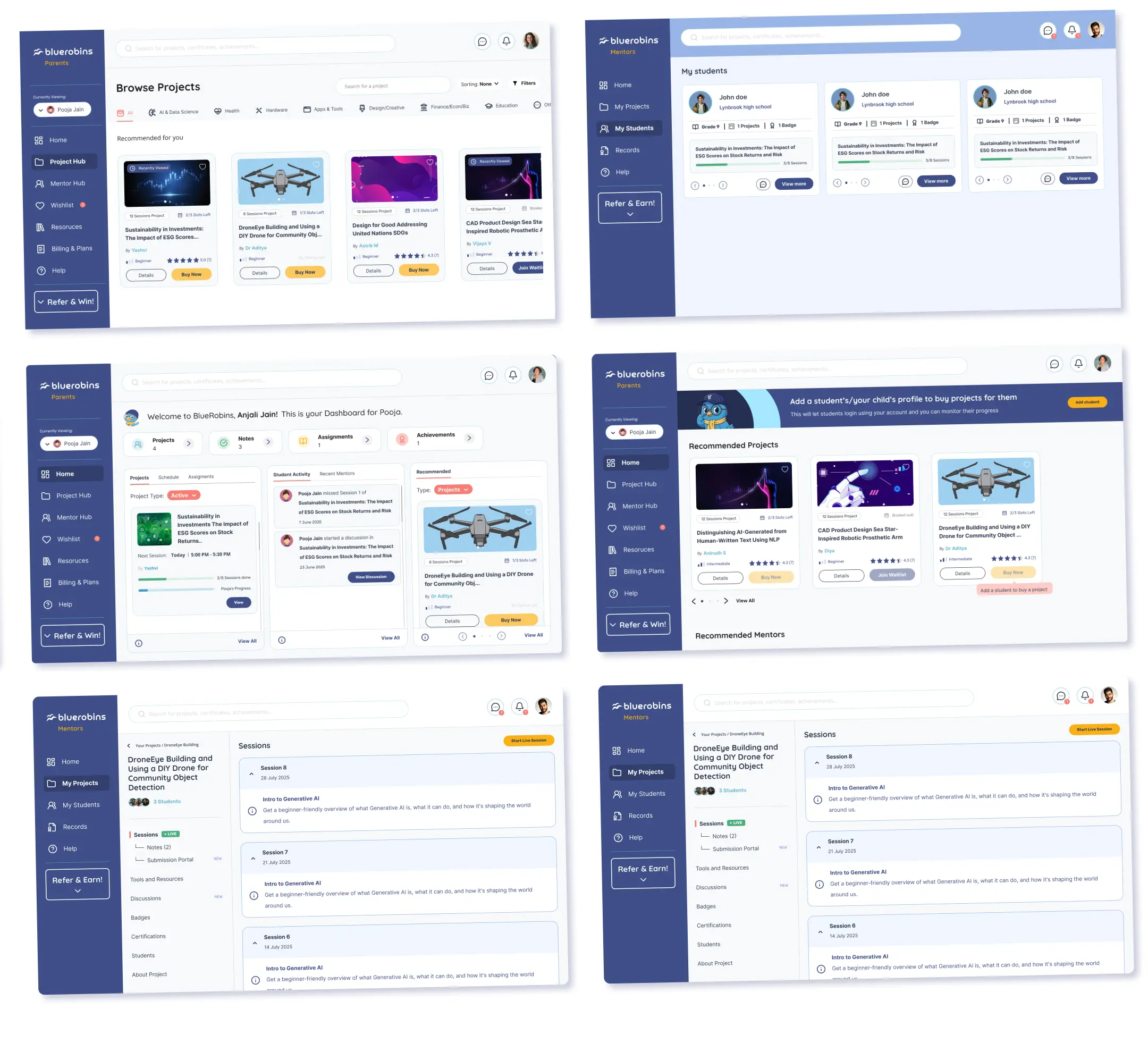
A student needed to track live sessions, submit weekly assignments, access tools and resources, write notes, earn badges, and view certifications — all within a single ongoing project view. Multiple design iterations were required to arrive at a navigation structure that made this accessible.
Connect with Mentors
The mentor hub gives students a space to explore who they might work with before committing to a project. Mentor profiles are visual and story-driven rather than credential-heavy, built on the research insight that teenagers respond to personality and approach before they evaluate qualifications. Students can browse mentor specialties, watch intro content, and start a conversation directly from the discovery screen.
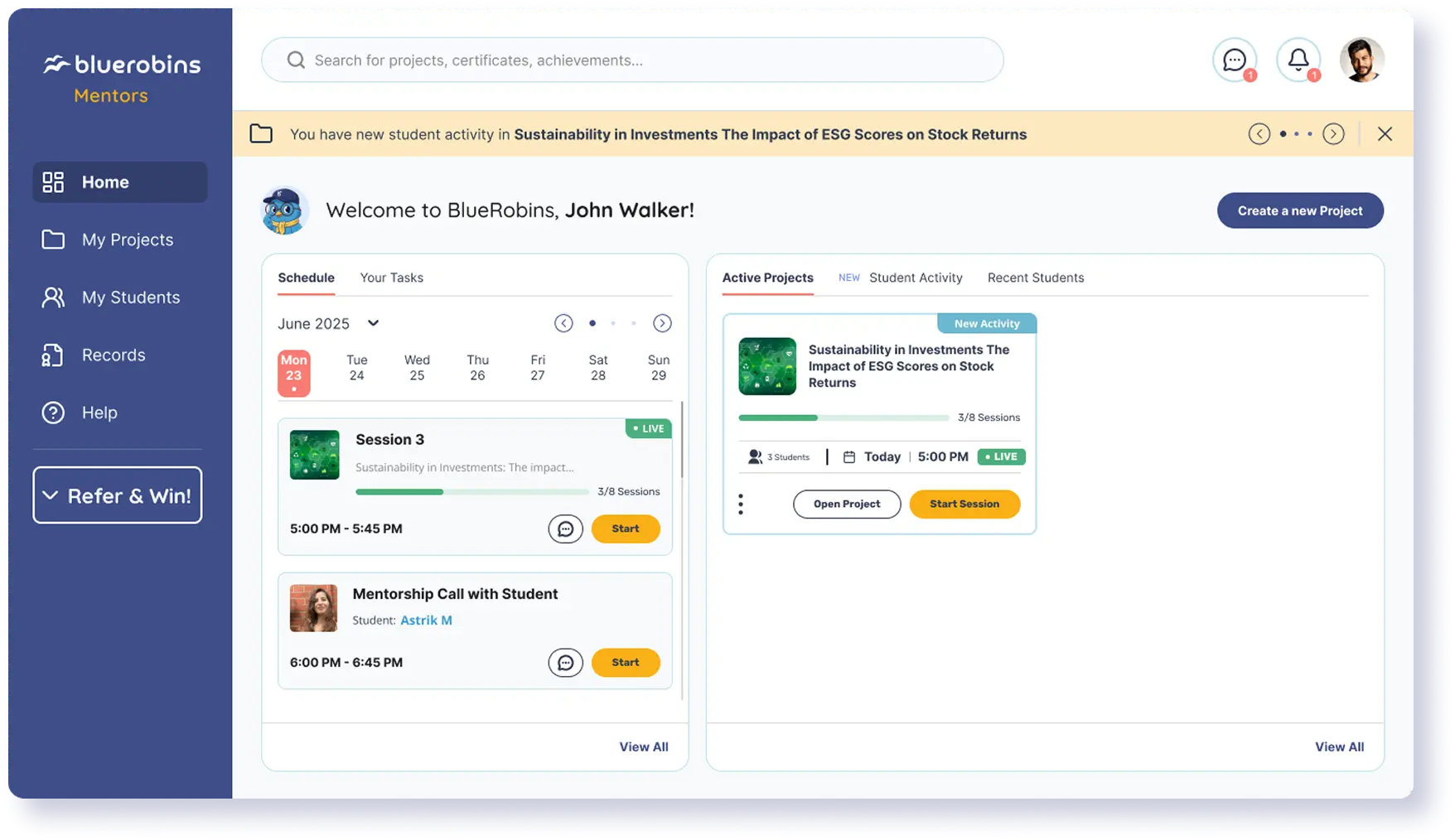
Mentor Portal
The mentor portal was designed around three core needs identified through research: autonomy, impact visibility, and the freedom to teach without friction.
AI Assisted Project Creation
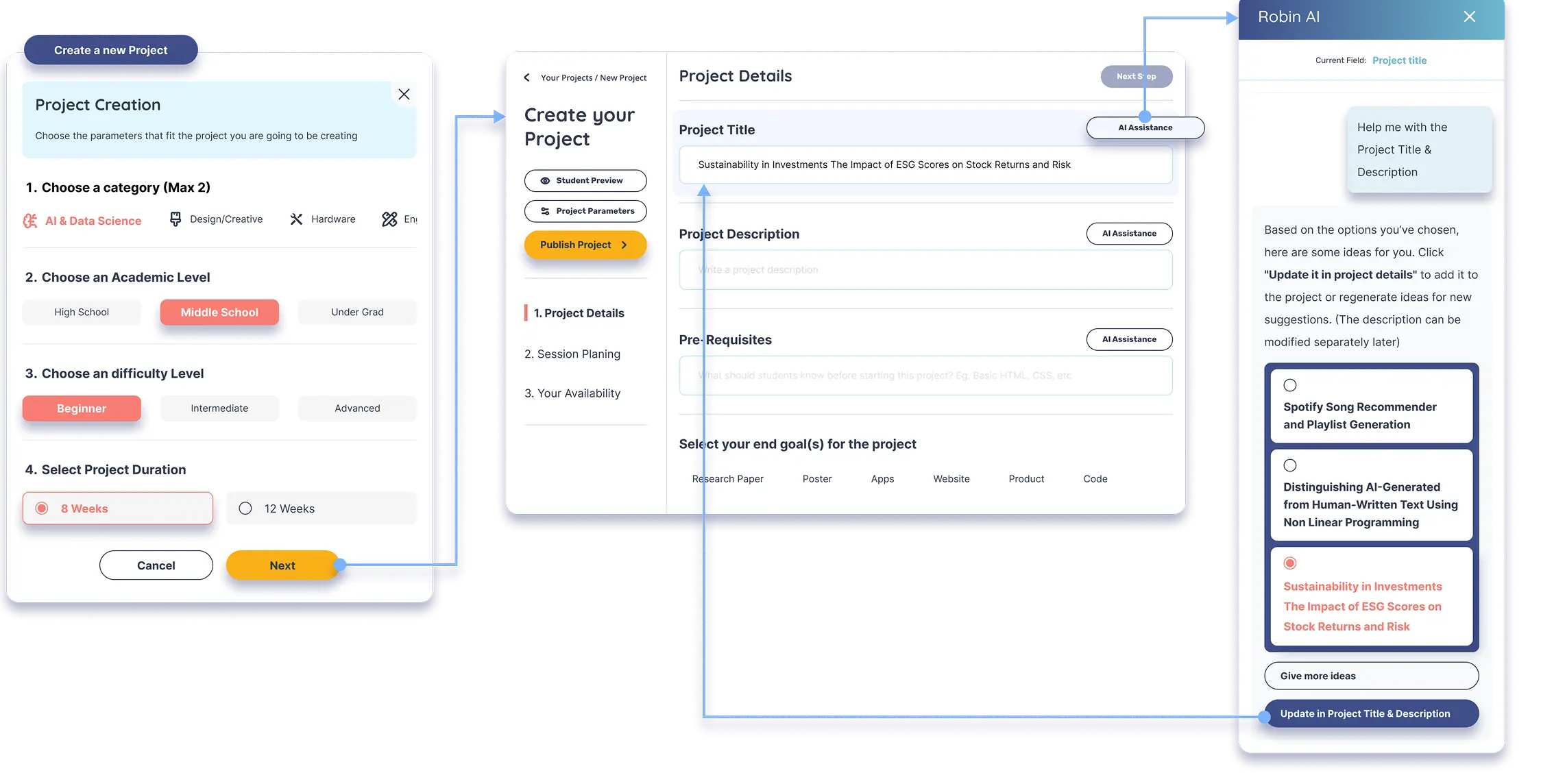
Early designs for Project Creation gave AI full control over the creation flow — generating titles, descriptions, and session plans from custom prompts while the mentor reviewed. Testing with real mentors revealed this undermined the platform's core purpose: mentors felt disconnected from their own projects. We went back to the drawing board and arrived at a chat-based assistant that mentors invoke selectively. Robin suggests project titles, descriptions, session structures, and thumbnails based on the mentor's stated expertise.
Earn and Grow
The records section gives mentors a clear picture of the students they have worked with, the sessions they have delivered, and the feedback they have received. This was a deliberate design decision rooted in persona research: mentors who could see evidence of their own effectiveness were significantly more likely to stay engaged with the platform long-term.
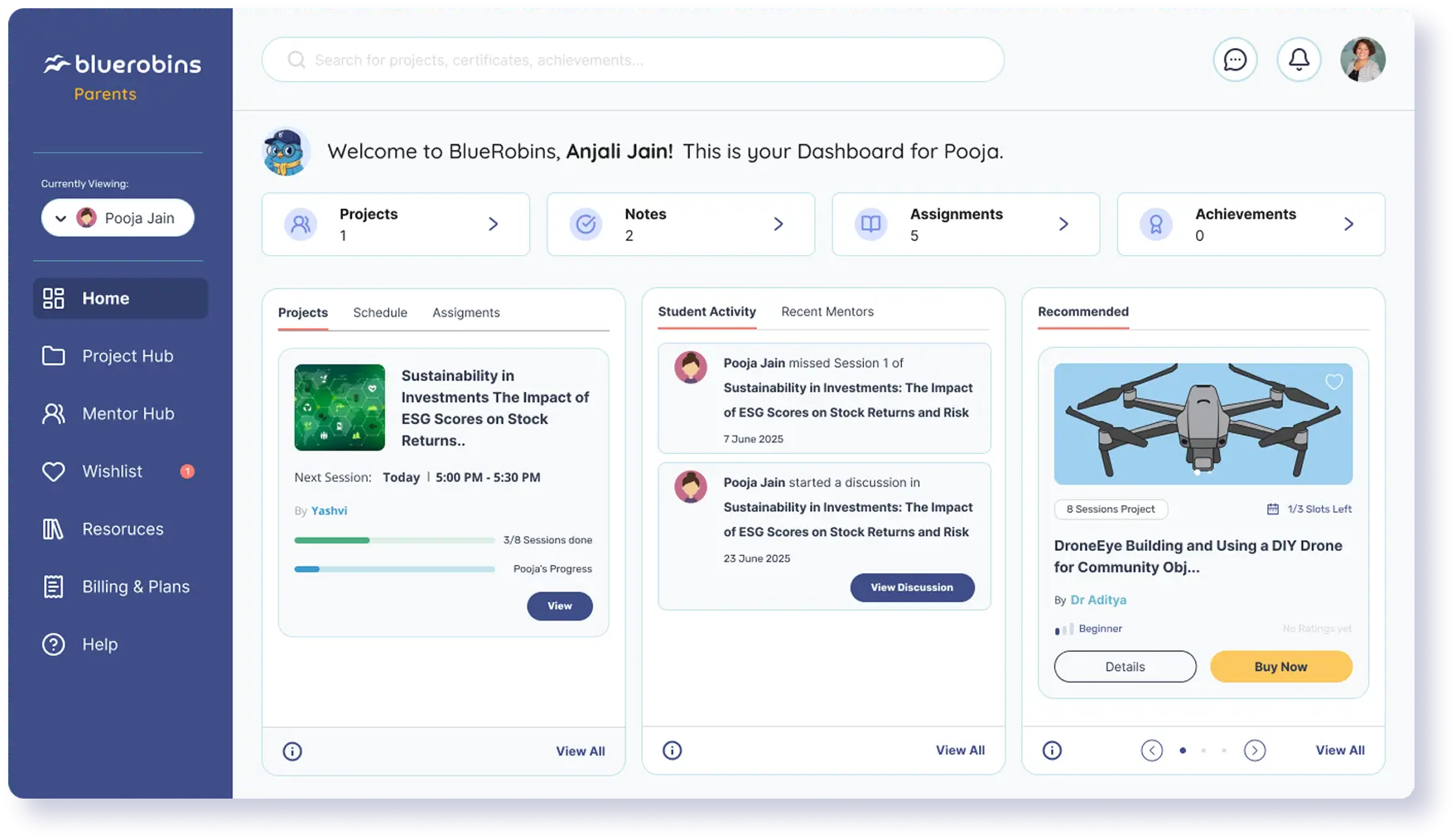
Parent Portal
This is one of the most complex UX challenges in the product — designing for someone whose primary experience of the platform comes secondhand, through their child. Our research showed that parents need transparency above everything else: who is mentoring their child, what they are working on, and whether it is leading anywhere. The parent portal was designed to answer those questions without requiring parents to navigate to find them.
Plan your child's growth and progress
This is one of the most complex UX challenges in the product — designing for someone whose primary experience of the platform comes secondhand, through their child. Our research showed that parents need transparency above everything else: who is mentoring their child, what they are working on, and whether it is leading anywhere. The parent portal was designed to answer those questions without requiring parents to navigate to find them.
Keep connected with the Mentors
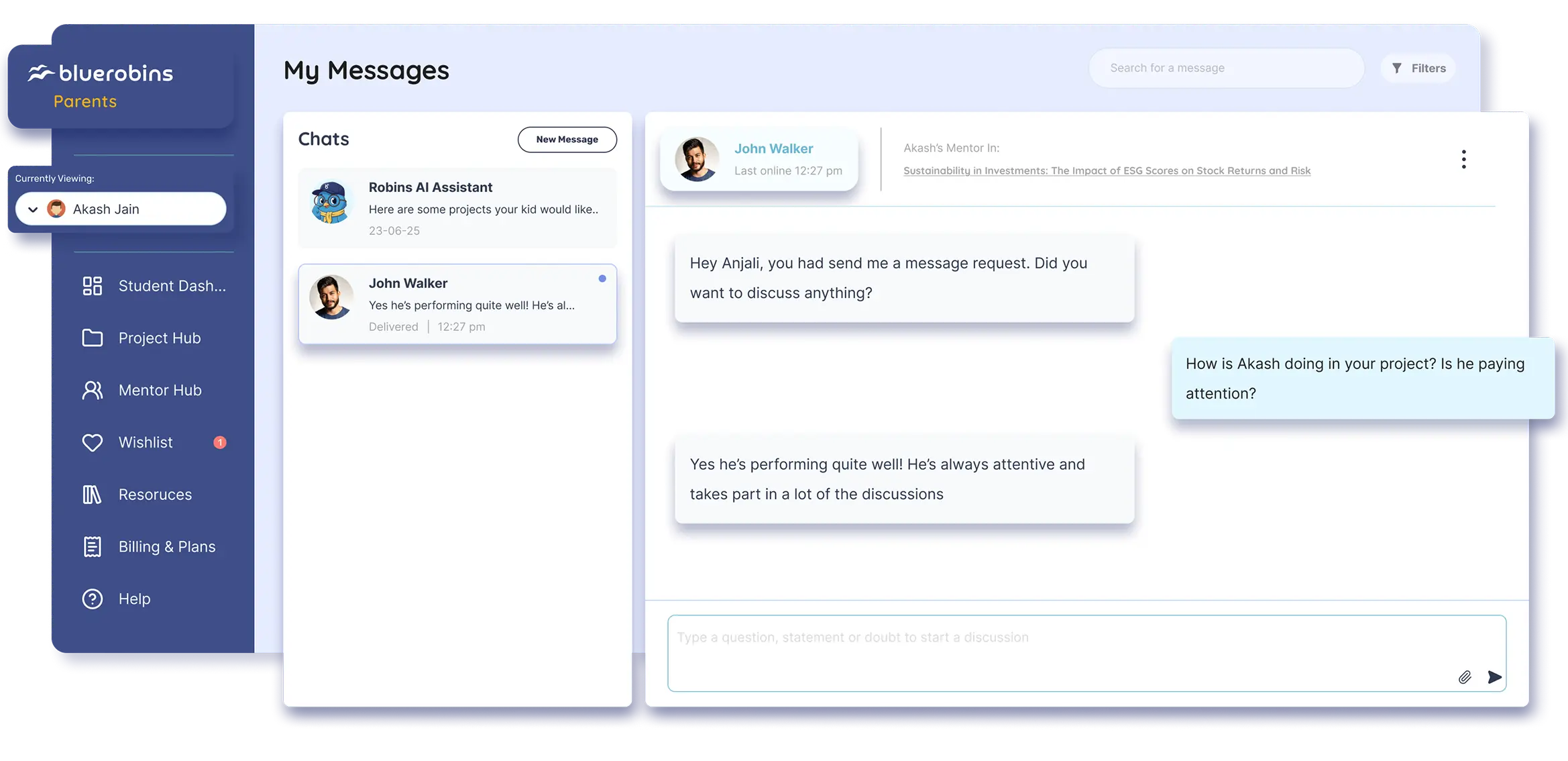
Parents can browse and connect with mentors directly from their portal, with credentials and areas of expertise surfaced in plain terms rather than academic language. The portal also surfaces AI-recommended projects for each child, generated from the student's interests and academic profile. This layer was designed specifically for parents who want to be involved in their child's project selection without overriding the student's own curiosity.