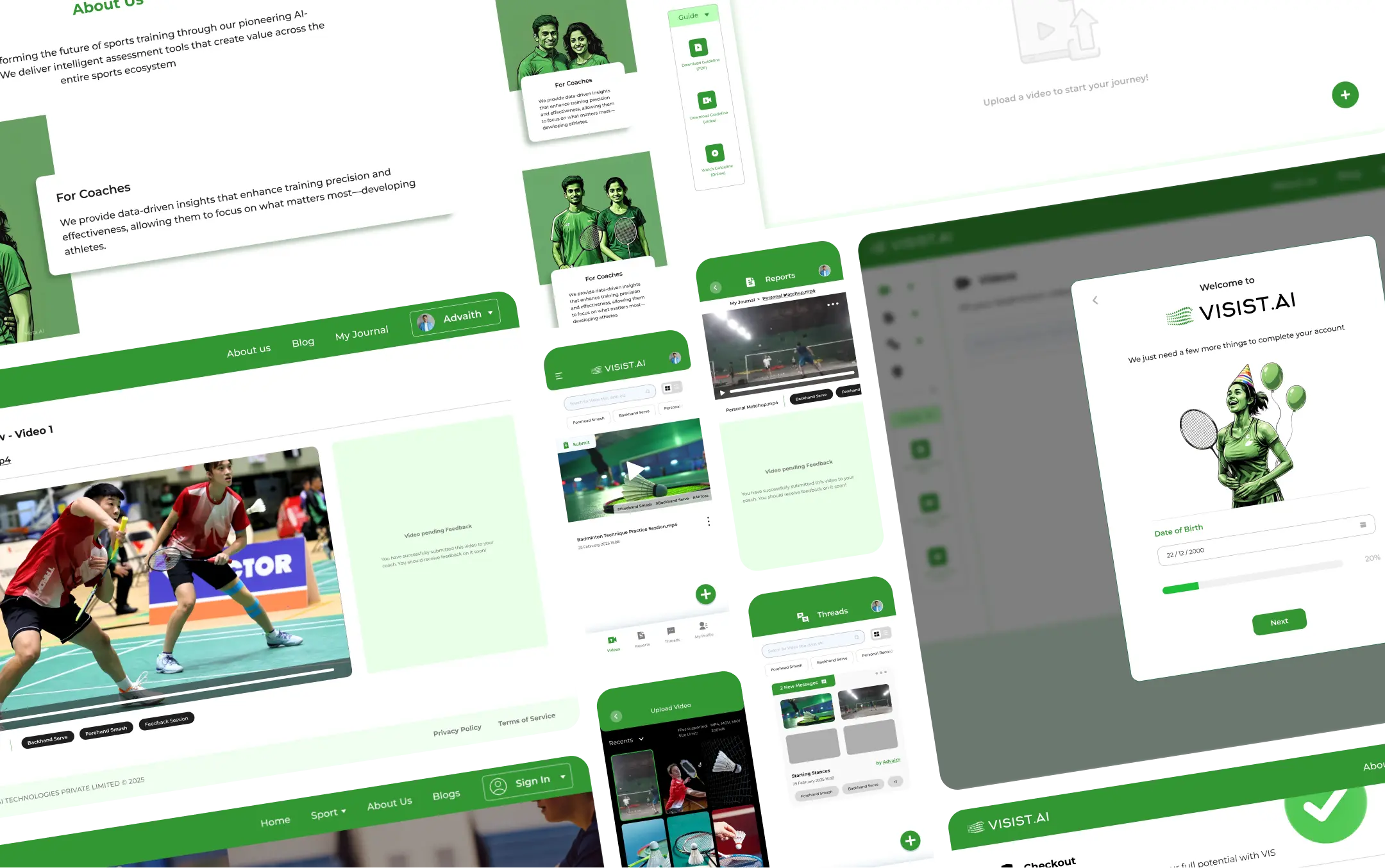
Welcome to Visist
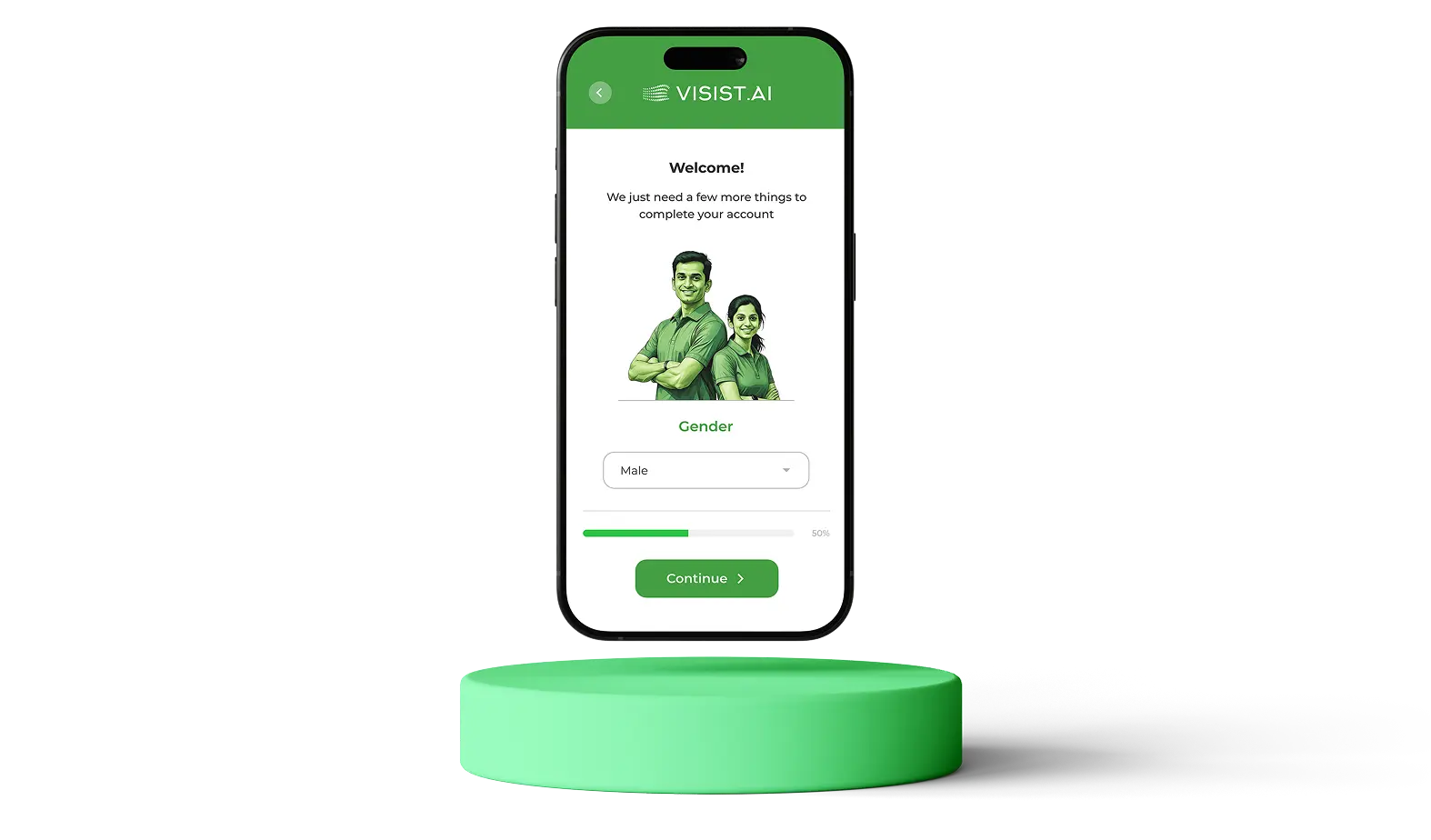
The onboarding experience sets the tone for everything that follows. For a platform targeting young athletes, the entry flow needed to feel clear and low friction. We designed a minimal, step-by-step onboarding that eases players in — collecting only what's necessary upfront and surfacing the platform's value before asking for anything in return. This was backed by a 10-week design thinking process — qualitative interviews, a survey of 60+ families, and weekly Figma sprints ensuring every decision was rooted in real user needs.
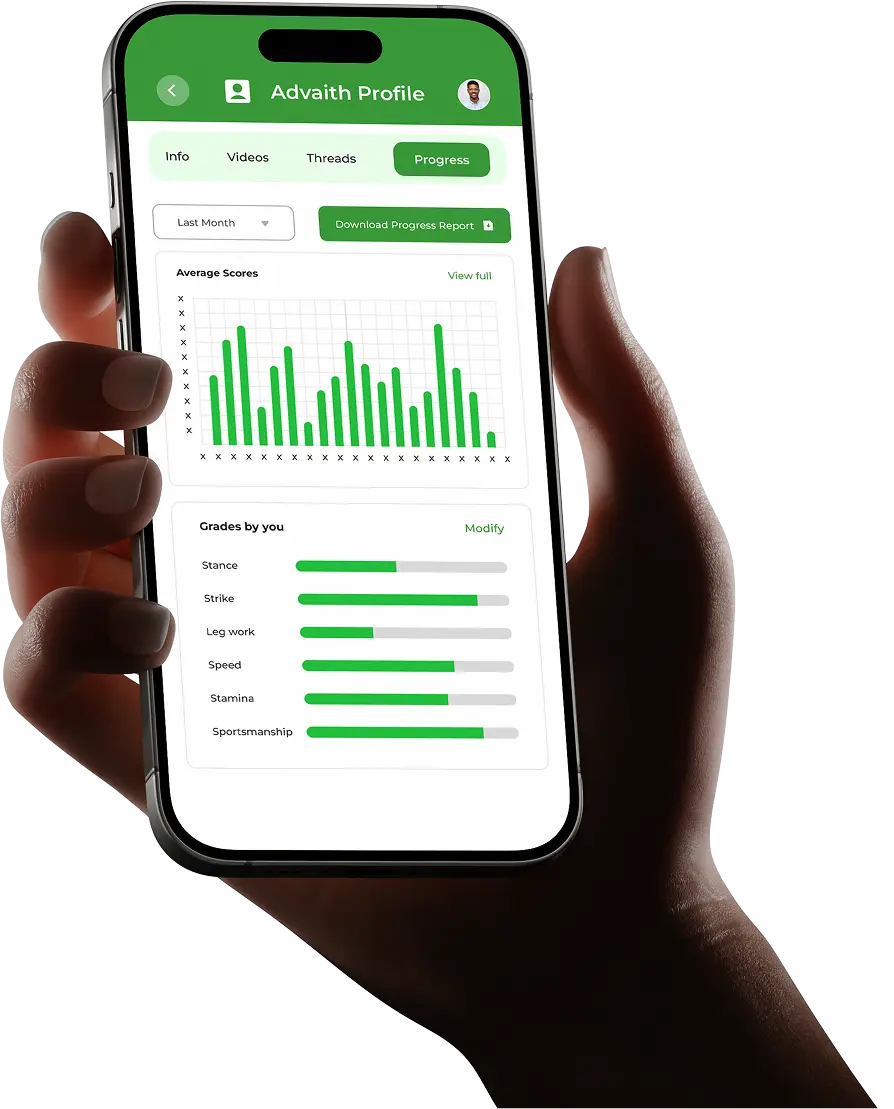
Player Profile
We structured the player's profile to surface what matters to an athlete — their sport, their progress, their history — in an order that makes sense to them first. The information hierarchy was built directly from our persona research, with Advaith — a 20-year-old casual player who needed affordable, structured feedback — as the reference point throughout.
Choose the Game
The platform covers multiple sports, and each discipline has its own training rhythms, metrics, and things worth tracking. Using the Montserrat typeface and a vibrant colour palette anchored in a bold green primary, we built a visual system that could flex across Badminton, Cricket, and beyond — giving each sport its own entry point while keeping the underlying experience consistent. Designing for multiple disciplines without fragmenting the product required a shared component logic that the visual system could stretch around.
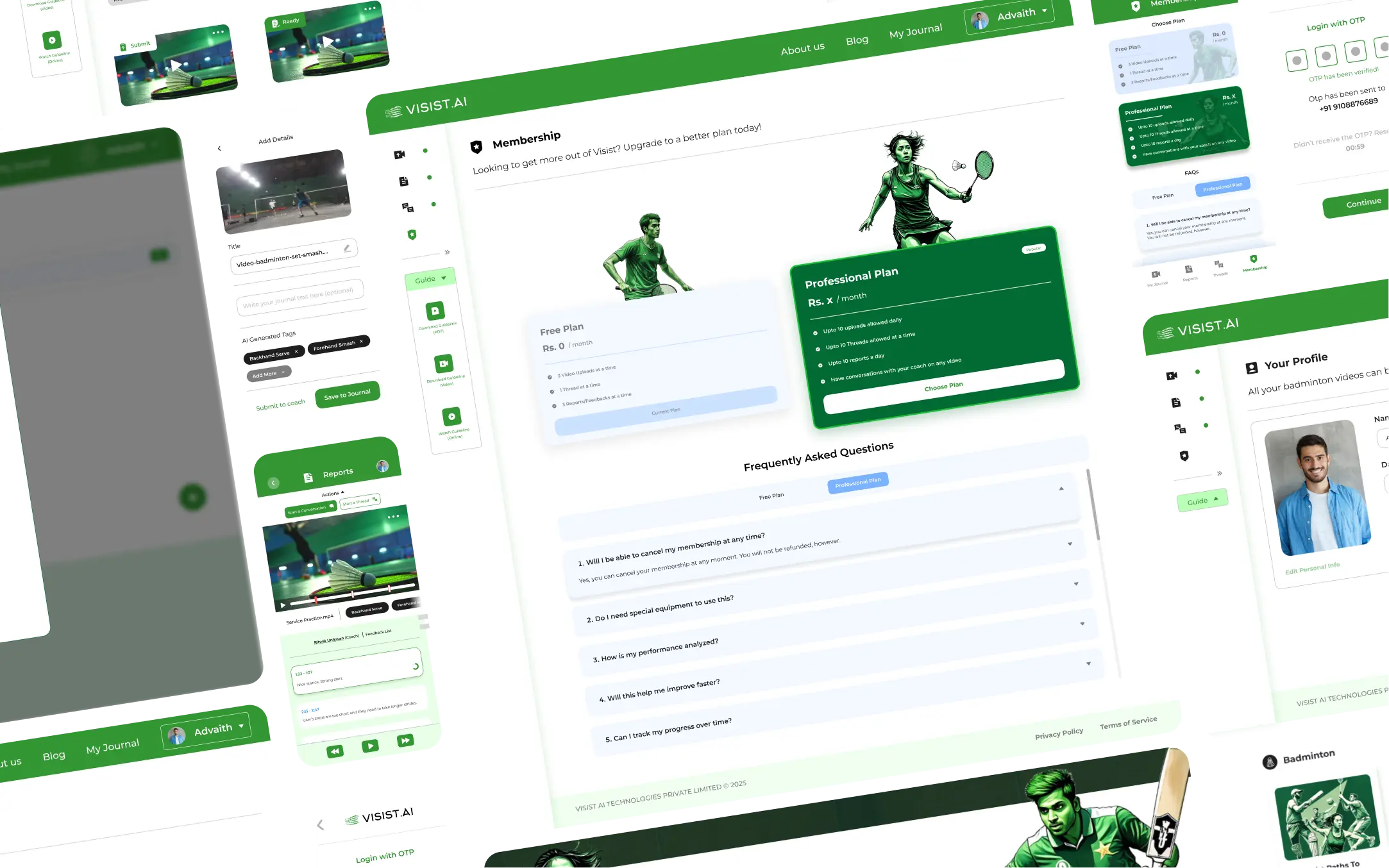
Player Subscription
Players move through the platform and encounter its value before a subscription prompt appears. The upgrade flow communicates what specifically unlocks at each tier rather than abstract plan names. When the subscription screen arrives, it reads as the natural next step in a journey the player is already invested in.
Welcome, Coach
The coach onboarding experience is a streamlined setup flow that introduces key dashboard features, team management capabilities, and real-time performance analytics, ensuring coaches can hit the ground running and focus on what matters.
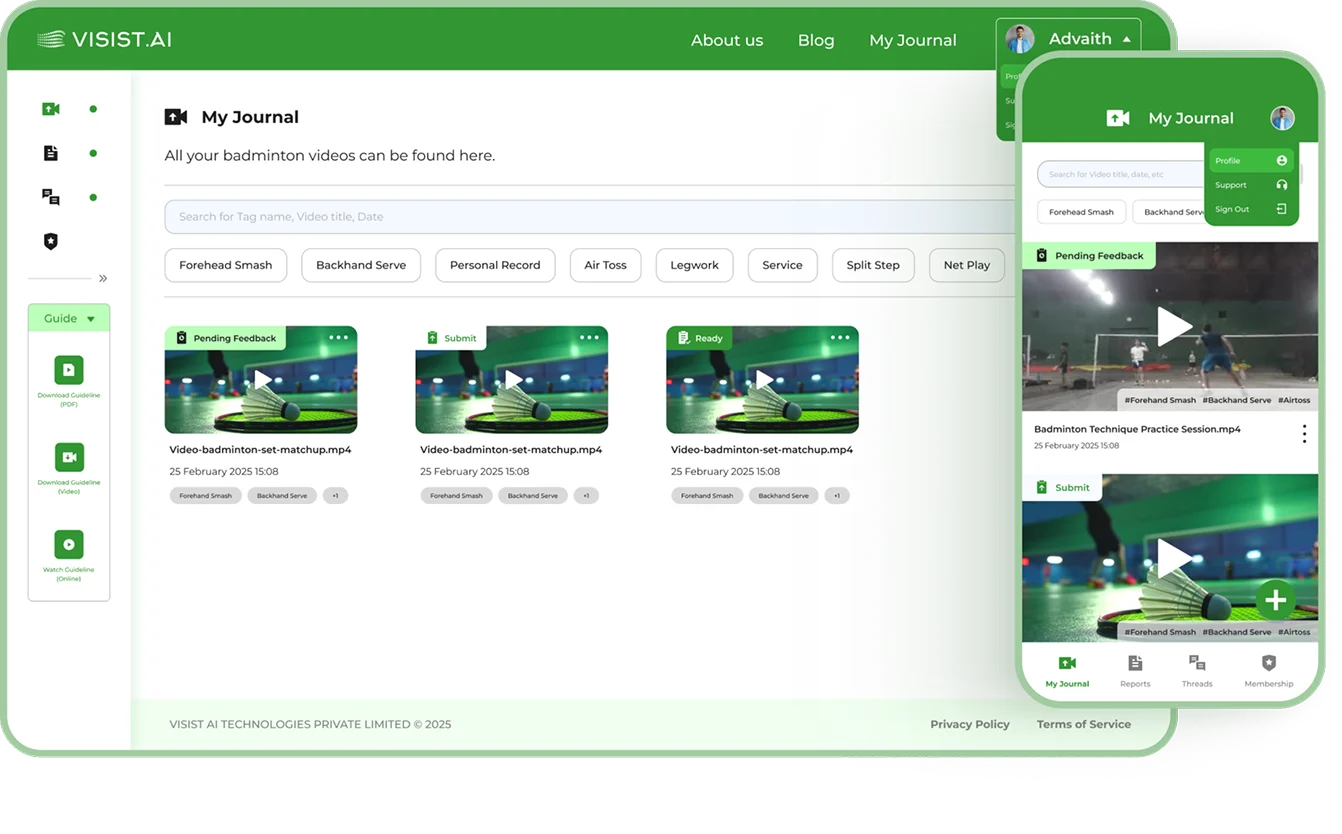
Video Queue
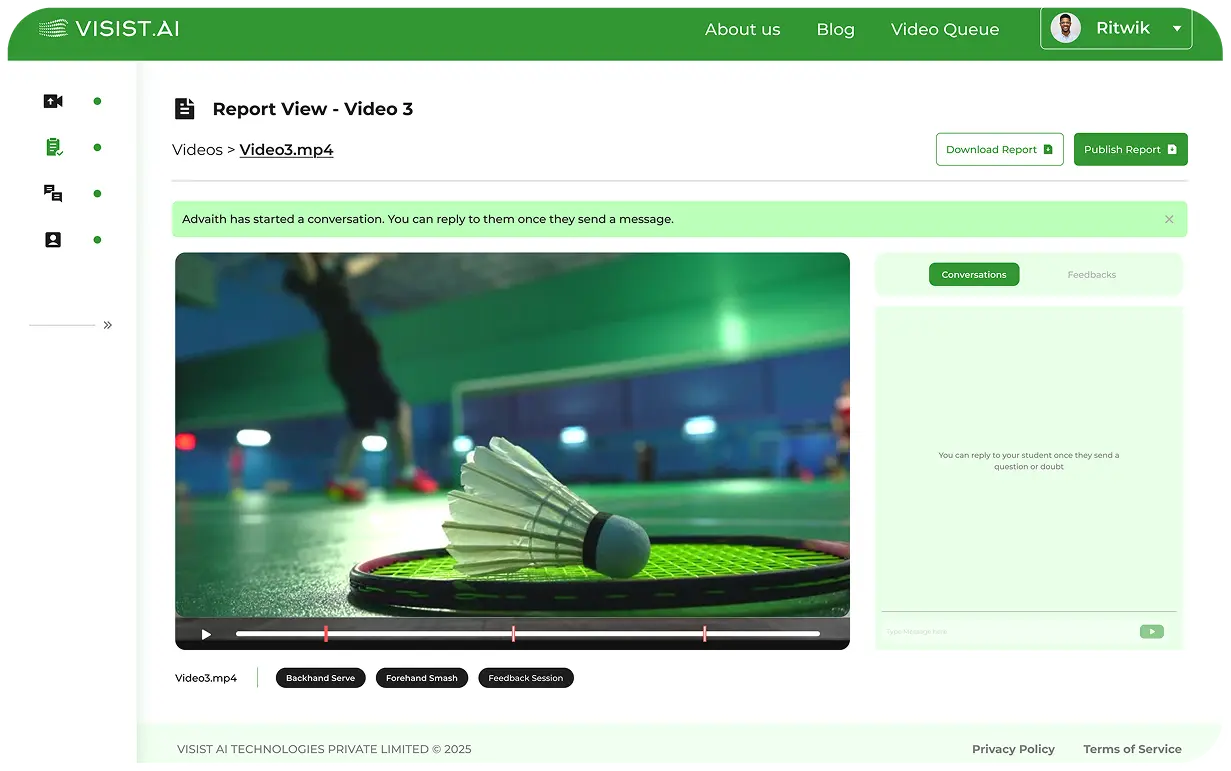
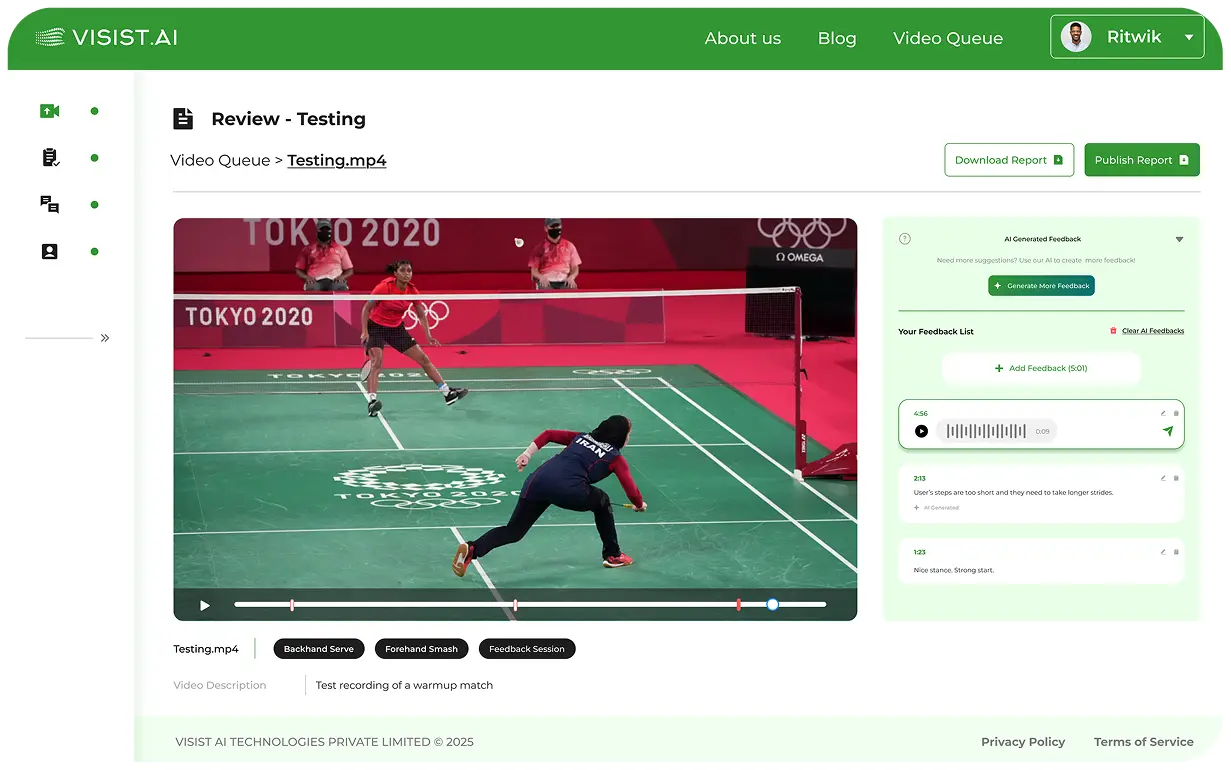
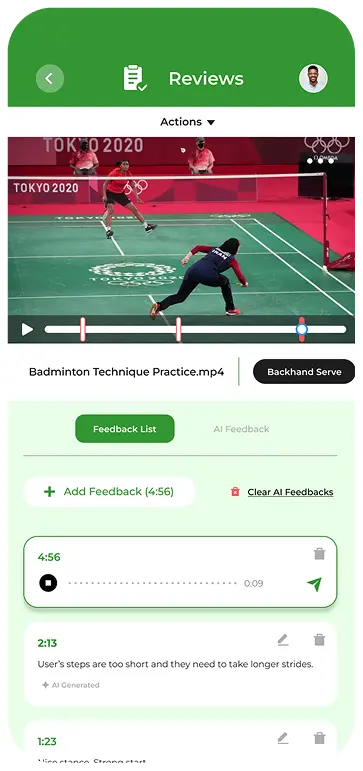
A coach's working session on Visist.ai begins with the video queue — a prioritised list of submitted player videos waiting for review. We designed this screen around speed of triage: which videos are pending, which have been reviewed, and where attention is needed first. For coaches managing students across varying skill levels and submission frequencies, clarity at the first screen determines whether the platform fits into their workflow at all.
Students Page — Student Management
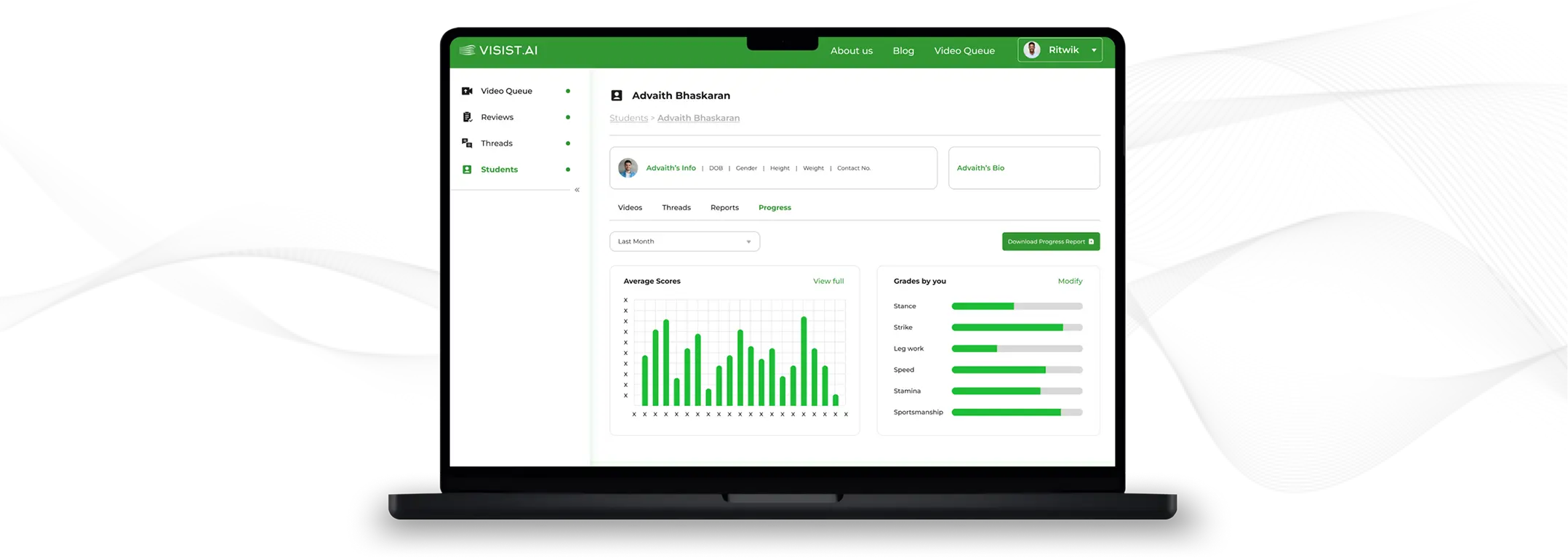
Coaches working across multiple students needed a way to maintain context without losing track of where each player stood. The students page gives coaches a complete view of everyone they've worked with. Drilling into an individual student surfaces their full history — videos submitted, threads active, feedback published, assessments completed — without switching between screens or reconstructing context from memory.
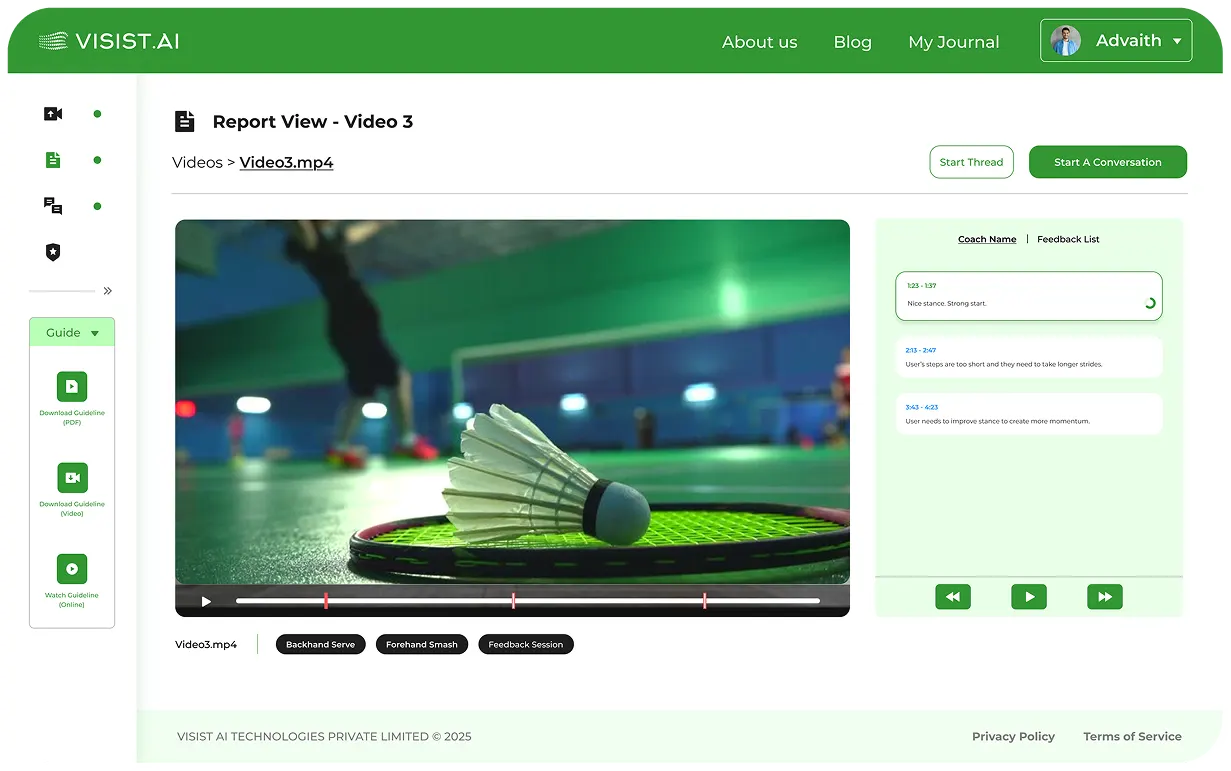
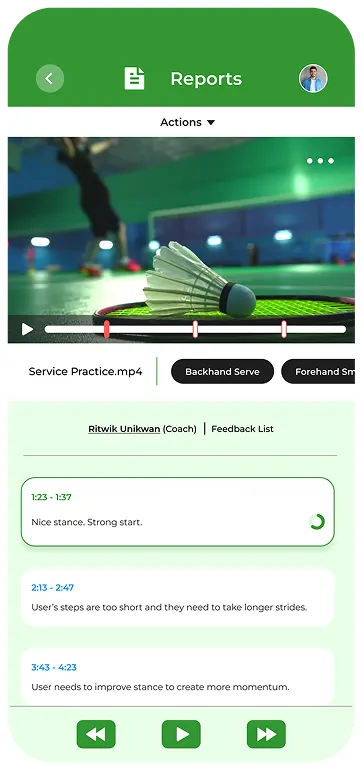
Threads & Stats — Progress Tracking
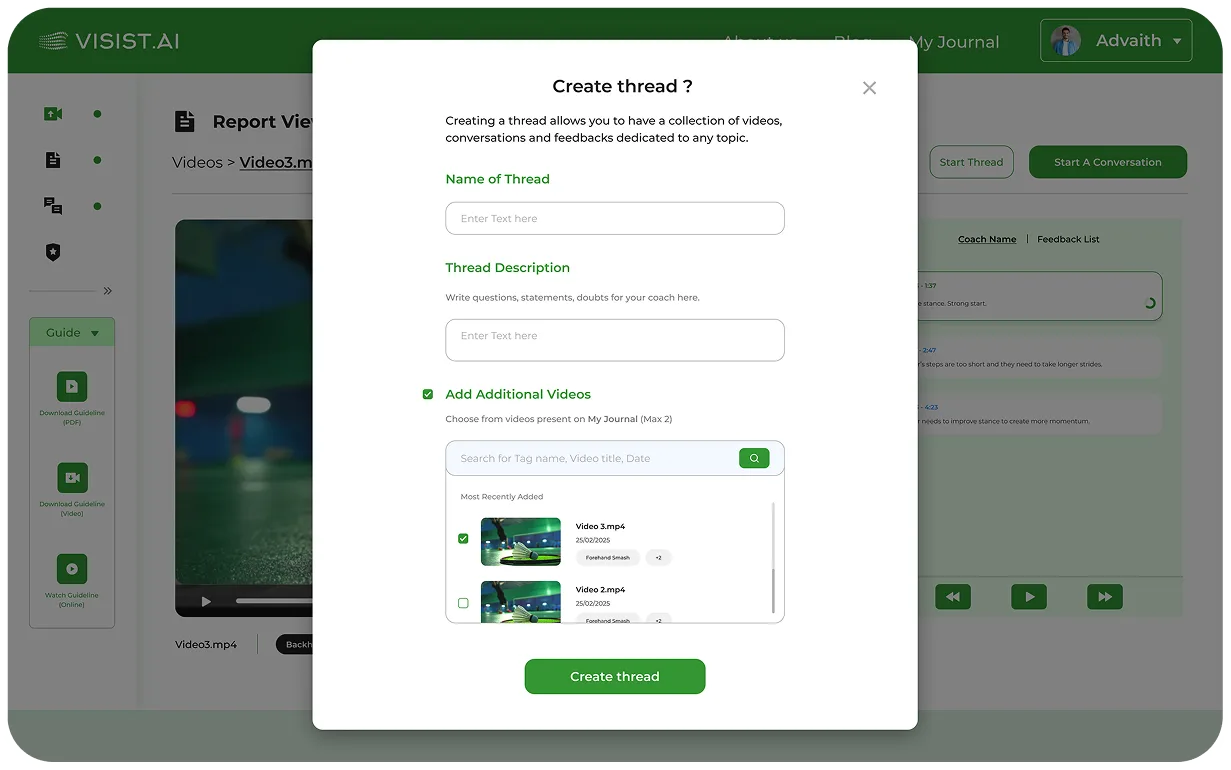
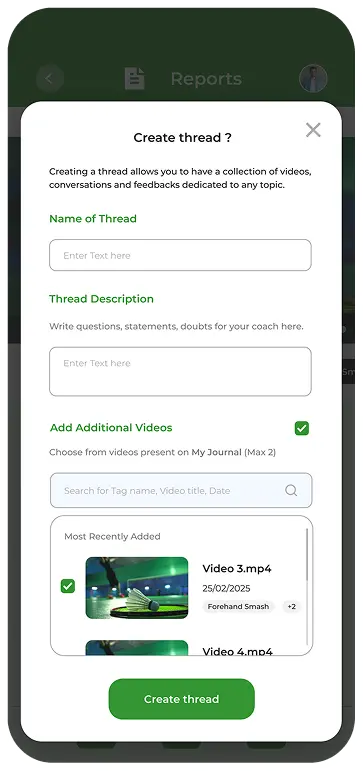
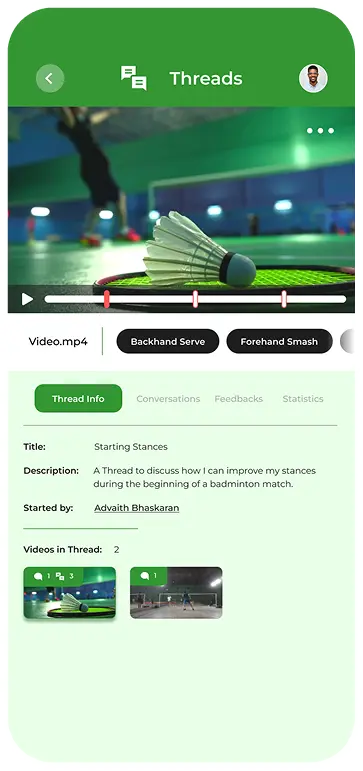
Threads give coaches a structured view of a player's development across a specific skill over time. A thread tracking backhand technique might span several weeks of submissions — the coach can follow the progression, generate statistics from the video content, and share a documented summary directly with the player. This was the feature that moved the platform from a feedback tool to a genuine development record, giving both coaches and players a shared, evidence-based view of where the work is going.
Impact & Results
The results confirmed that creative, user-centric storytelling drives engagement. The redesigned screens performed significantly better than previous versions, directly increasing athlete interaction with their performance reports. Due to the measurable success of this gamified approach, Visist.ai has indicated their intent to continue working with UniKwan for the design of all future reporting templates and platform expansions.